Talking Myths - An online archive of traditional tales from Indian subcontinent
  • Home
  • About Us
    • About Talking Myths Project
    • Team Talking Myths
    • Contributors
    • Associates
  • Archives
    • Categories
      • Folktales
        • Folktales from Mahabharata
        • Folktales from Ramayana
      • Myth
      • Legend
      • Beliefs and Traditions
      • Taboo
      • Didactic Tales
        • Fables
        • Jataka Tales
        • Panchtantra
  • Share a Story
    • Terms & Conditions
    • Upload Story
    • Submission Criteria
  • Index
    • Source
    • Authors/Texts
    • Location
  • Lectures
  • Blog
  • Events
  • Contact Us
  • YouTube
Home
About Us
    About Talking Myths Project
    Team Talking Myths
    Contributors
    Associates
Archives
    Categories
    Folktales
    Folktales from Mahabharata
    Folktales from Ramayana
    Myth
    Legend
    Beliefs and Traditions
    Taboo
    Didactic Tales
    Fables
    Jataka Tales
    Panchtantra
Share a Story
    Terms & Conditions
    Upload Story
    Submission Criteria
Index
    Source
    Authors/Texts
    Location
Lectures
Blog
Events
Contact Us
YouTube
  • Home
  • About Us
    • About Talking Myths Project
    • Team Talking Myths
    • Contributors
    • Associates
  • Archives
    • Categories
      • Folktales
        • Folktales from Mahabharata
        • Folktales from Ramayana
      • Myth
      • Legend
      • Beliefs and Traditions
      • Taboo
      • Didactic Tales
        • Fables
        • Jataka Tales
        • Panchtantra
  • Share a Story
    • Terms & Conditions
    • Upload Story
    • Submission Criteria
  • Index
    • Source
    • Authors/Texts
    • Location
  • Lectures
  • Blog
  • Events
  • Contact Us
  • YouTube
Talking Myths - An online archive of traditional tales from Indian subcontinent
Myth

Gajendra-moksha

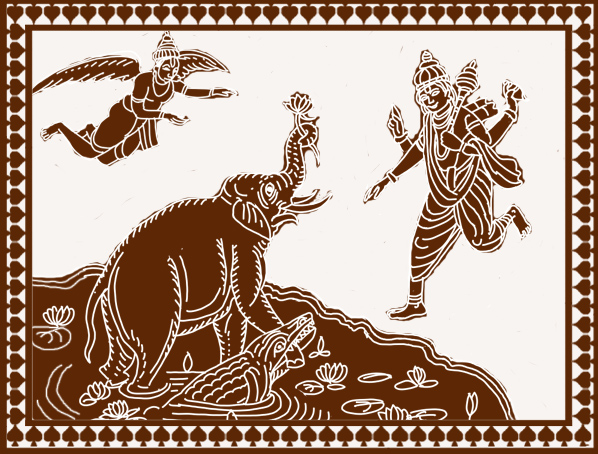
Gajendra-moksha or the salvation of elephant king Gajendra is a very popular story in the Hindu religious texts. Gajendra Moksha tale gets prominent mention in Bhagvat Purana, Skanda Purana, and Vishnudharmottara Purana with a few variations in the narrative. The tale is recounted as the example of Bhakti tradition in Vaishanv cult.

According to the tale in Bhag. P. A herd of elephants lived on the Trikuta mountains led by an elephant named Gajendra. The herd would graze in the nearby forest and drink water from the lake close to the mountain. Following this routine, one day the herd after having their fill of fruits and foliage from the forest went to the nearby lake and began frolicking in the crystal clear waters peppered with lotus flowers. As Gajendra the elephant stepped into the lake, a large crocodile clamped its powerful jaws on to his leg . The massive elephant tried with all his might to extricate himself from the iron grip of the crocodile, but in vain. The tussle between the elephant and crocodile went on for hours but the crocodile wouldn’t let go and the exhausted massive elephant started sensing defeat and the approach of his inevitable death. As a last resort he started praying to lord Vishnu for help.

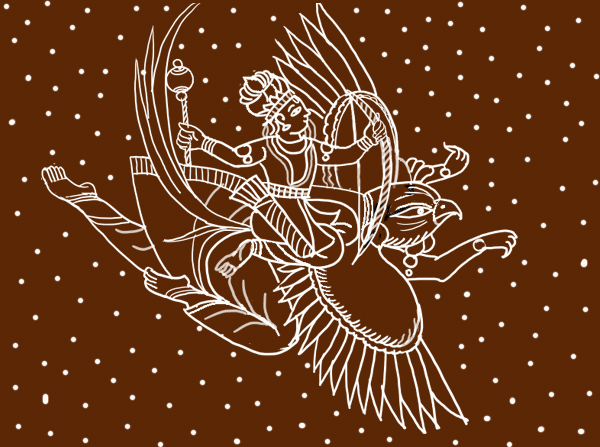
When Hari ( Vishnu ) heard the desperate cries and prayers of the elephant, he came riding on the wings of his vehicle Garuda. At the very same moment the elephant caught sight of Lord Vishnu, he was dragged violently into the lake by the crocodile, and as the last act of devotion before his death, the elephant plucked a lotus flower and offered it to Vishnu and saluted him. Hari (Vishnu) was so moved by this act of devotion by the elephant, he rescued it by slashing open the jaws of crocodile with his Sudarshan chakra. Thus the elephant Gajendra was saved from certain death.

It is Skanda Purana that gives us the back story of the elephant and the crocodile and the reason for their enmity. According to Skanda Purana, the crocodile was a noble Gandharva in his previous birth by name Huhu who was cursed by sage Devala to turn into a crocodile. When Vishnu flung his sudarshan chakra on the crocodile to save the elephant, the curse was broken and the Gandharva freed from the sage’s curse regaining his original form and was free.

The elephant too was the victim of a curse by sage Agastya. In his previous birth the elephant was a Pandya King by the name of Indradymna. Sage Agastya had rebuked and cursed him for neglecting his duties as a king and for being unmindful of his responsibilities towards his subjects. It is said that when Indradymna in the form of the elephant let go off his pride and surrendered his life to Vishnu, he achieved moksha or salvation.

Vishnudharmottara Purana gives the same account with a significant variation. A crocodile and an Elephant lived in the vicinity of Jambudvipa on the top of the mountain called Sringavan. In their former births they were Gandharvas by the name Huhu and Haha. These two Gandharvas were well known for their singing skills. One day both of them got into an argument to decide who is the superior singing talent. They went to sage Devala for a asked him for his opinion and requested him to judge who is the superior talent. But when they did not get a favourable response, both of them insulted the sage Devala by saying he has donkey’s ears as far as the knowledge of music goes. The enraged sage cursed both the Gandharvas to turn into beasts. Accordingly Haha became an elephant and Huhu turned into a crocodile and lived that way until the day Hari ( Vishnu) pleased with their devotion rescued them from their plight by removing the curse.

Story Collected by : Vidya Kamat
Text Source: “ Gajendra Moksha”, Puranic Myth and Culture by S. A. Dange
Location : Pan India
Image Copyright: Vidya Kamat

March 23, 2020by admin
FacebookTwitterPinterestGoogle +Stumbleupon
Folk-Myth

Tamarind Tale

There is a saying in Konkani language – ” Ghova baileche ek chit zalyar chiche panar nhid. Meaning, even a small thin leaf of the tamarind tree is enough to accommodate a couple if they love each other (otherwise even a big bed is not enough!)

The tamarind (Tamarindus indica or imli in Hindi and chinch in Marathi and Konkani) is a large, evergreen tree, with dense foliage. A native plant of the African continent, tamarind is a tropical tree that grows abundantly in India.It is popular as an avenue tree as it provided a very cool shade. Known for its sour fruit and acidic pulpy juice, tamarind is used in many south Indian curries and chutneys. The tamarind tree is a sacred tree for Krishna ; Vaishnav saints Nammalvar and Chaitanya are said to have meditated under this tree. However for a tree which is large and grows to be 25-30 meters tall, its leaves are remarkably small and tiny.

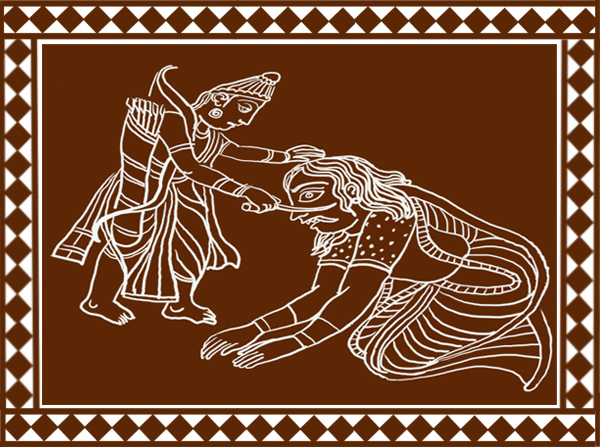
There is a tribal myth that explains why this tree has such tiny leaves. Once upon a time, the tamarind tree had large and broad leaves and would provide cool shade to people who would rest under its shade. When Ram, Lakshaman and Sita went into exile, they would often rest under a tamarind tree ,as it could shelter them from rain, sun, and heat and cold. One day Ram realised that being in exile meant they have to lead a life of struggle and inconvenience and not of comfort and pleasure. The nurturing shade of the tamarind tree was actually providing them  the comforts of a palace. He immediately ordered Lakshmana to shoot at its large leaves and split into tiny small leaves. Lakshman obeyed his brother’s command and since then the tamarind tree has tiny leaves.

According to another myth, long ago Devas and Asuras lived on the earth. One day, Bhasmasura the chief of asura army challenged Mahadeo to a duel, proclaiming whoever wins would be the sole ruler of earth. Mahadeo accepted the challenge and the duel began. Soon Mahadeo wounded Bhasmasura grievously and. Bhasmasura scooted for his life with Mahadeo chasing him. Bhasmasura ran and entered a thick jungle and started searching for a place to hide. He noticed a huge tamarind tree and clambered onto it hastily, shielding himself with its thick broad leaves. Mahadeo followed Bhasmasura and entered the jungle, but he could not see the demon Bhasmasura who was hiding behind the broad tamarind leaves. Out of frustration Mahadeo roared and opened his third eye. The whole sky lit up with fire from the eye and the large tamarind leaves shattered into tiny fragments exposing Bhasmasura. The Demon was killed immediately by Mahadeo, and since then tamarind leaves have remained small and tiny.

Pointing out to its small tiny leaves, my grandmother would tell her grandchildren, “Look boys!  be together and work together in harmony like these tiny tamarind leaves.If small people like you and me work together, we can do a great deal to transform the world. It is not the place that makes the man, but the man who makes the place.”

Story by : Avadhut Kudchadker

Source: As told by grandmother inputs from Sacred plants of India by Nanditha Krishna and M. Amrithalingam.

Location Goa and Pan India

Image copyright: Vidya Kamat

March 16, 2020by admin
FacebookTwitterPinterestGoogle +Stumbleupon
Folktales from Ramayana

Shurpanakha’s Revenge


In Andhra Pradesh, women sing tales from Ramayana in the privacy of their homes. However, they narrate Ramayana from the women’s perspective highlighting interpersonal relationships, rather than the war scenarios. Thus female characters are the main focus of their telling. For Instance Kausalya’s birth pangs, Sita’s bidai, and the wedding night of Sita and Rama get a lot more attention in these songs . Women’s Ramayana also openly blame Rama for Sita’s plight. They recall how Rama’s envy and suspicion of Sita’s character led to Sita’s banishment. The story is known as the revenge of Shurpanakha .The narrative begins when Rama, Sita and Lakshman have returned to Ayodhya after defeating Ravana.
Shurpanakha, the sister of Ravana, is angry and feels humiliated for Lakshman has cut her nose and ears and further more, her powerful brother Ravana, was killed in the war. Shurpanakha feels she needs to take revenge on Rama. Being a women, she is no match to Rama’s strength and skill in battlefield, and the only way she can belittle Rama is by disturbing his peace of mind and happiness. Identifying Sita, as the root cause of all her pain and tribulations, she decides to humiliate Sita to take revenge on Rama .
Taking the form of a hermitess Shurpanakha goes to Ayodhya, where Rama is now ruling as the King. She goes to Sita’s palace and asks for Sita stating she had met Sita during her days of exile in the forest. Sita is little hesitant to meet her, as she can not recollect any past meeting, but after some persuasion from her aides Sita agrees to meet the hermitess.
Hermitess asks Sita, about Ravana. “Oh great Queen can you describe the wicked Ravana to me ? Can you draw his picture for me” Asks Shurpanakha in disguise. “ No holy lady! I never looked at Ravana? replies Sita. But hermitess is adamant “ Try to remember Ravana for me Oh Queen!. I am sure you must have seen something of him ” Shurpanakha insists. But Sita replies she never set eyes on Ravana as she looked only at his feet. Hermitess encourages her to draw whatever she recollects of Ravana, so Sita draws the picture of Ravana’s big toe.
Shurpanakha then completes the picture –depicting Ravana as a handsome man with a broad shoulders and chest, with strong ankles and thighs. She then pleads Brahma the creator of life, to breath life into the picture so that she can fondly remember her dead brother in this life like image. Not knowing her ulterior design Brahma breaths life into the image which immediately comes alive. Shurpanakha now brings the picture to Sita’s palace and drops it at her feet and runs away saying, “ Do what you want with this picture”.

Continue reading

March 10, 2020by admin
FacebookTwitterPinterestGoogle +Stumbleupon
Folktales from Mahabharata

Nalakubar’s Curse

There are some questions in Ramayana that have remained a mystery. For instance, why the wicked and powerful Ravana, who was known for abducting and sexually assaulting wives of other kings could not force himself upon Sita after abducting her to Lanka?

Valmiki’s Ramayana describes a number of occasions when Ravana tries to threaten Sita and coerce her to surrender to his whim and fancy. But she remains unmoved and unaffected by his threats and cajoling.What could be the reason the mighty Ravana could not subdue gentle Sita’s mind and body?

In the Vanaparva of Mahabharat (280), Sage Vaishampayan narrates the following incident to King Janmejaya, and throws light on the above mystery to reveal why Ravana could not succeed in taking advantage of Sita.

After abducting and carrying off Sita to Lanka, Ravana kept her captive in Ashokavana surrounded by demonesses. The terrifying demonesses threatened Sita in all possible ways demanding Sita, surrender to Ravana as he was the most powerful King. But Sita categorically refused the demands by saying “Besides Rama I would not let any man touch my body”. To break Sita’s will, these demonesses began to torture her mentally and physically. Only demonesses Trijata, was sympathetic to the plight of Sita.

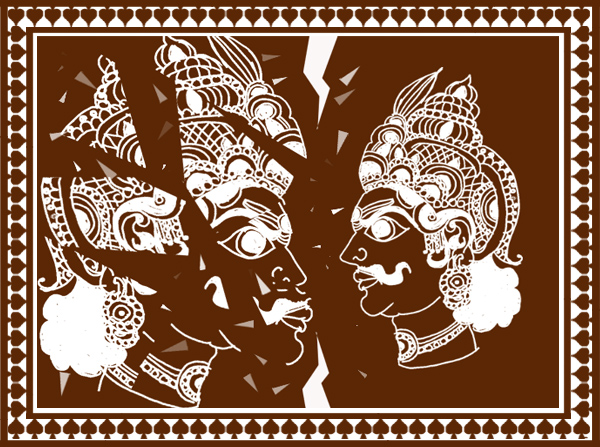
Trijata was not only kind to Sita, but she also assured Sita not to fear Ravana’s threats as he would never be able to touch her without her consent. When Sita, asked the reason why Trijata was so certain about this, Trijata replied, “Oh Sita, You would always be protected by Nalakubar’s curse that is holding back Ravana”. “And why did Nalakubar curse Ravana?” asked Sita, and Trijata replied “Once Ravana violated Rambha, the wife of Nalakubar and the daughter of Kuber, without her consent. When Nalakubar came to know of this he became livid with rage. He cursed Ravana that if he ever touches a woman without her consent, his head would splinter into a thousand pieces.” Ravana was bound by this curse and could no longer force himself upon any woman without her consent. Trijata assured Sita that she would be safe as long as she remains steadfast in her devotion to Ram, who would come and rescue her from Ravana’s captivity.

—————————-
Story Collected by: Vidya Kamat
Text Source: Mahabharatachi Shapvani by R. Bhide ( Marathi)
Location: Pan India
Image Copyright: Vidya Kamat

February 29, 2020by admin
FacebookTwitterPinterestGoogle +Stumbleupon
Folktale

Lord Vishnu in Love


In the kingdom of Gauda there lived two bachelor friends. One was a weaver and the other a mechanic, who designed chariots. Both were highly skilled in their professions and made a good amount of money through their work. Every day they would work till afternoon and by evening they would spend their time going out for night merry making, eating, drinking, and watching best of the dance performances in the town. They lived a very lavish life and everyone in town envied their lifestyle.

Once during a festival in town the two friends dressed in their finest clothes, wore an expensive perfume, put on their slick polished shoes, and went down to the town square bustling with people and fair festivities. Women and children jostled through the crowd peeping at the various curios and goods that were for sale. As the two friends lazily strolled through crowded square, the weaver happened to glance at the balconies where young daughters of rich and wealthy families stood watching the fanfare below. The weaver caught sight of a most beautiful girl standing along with her friends, and was mesmerised by her beauty.

Continue reading

February 19, 2020by admin
FacebookTwitterPinterestGoogle +Stumbleupon
Myth

Birth of Naran Dev


The Warli tribe settled along the Maharashtra and Gujarat state border are supposed to be one of the original inhabitants of the Konkan region. Over a period spanning a number of decades they have assimilated with many other tribals such as the Bhils, Kunbis of Konkan, and Kolis of Maharashtra. The mythological narratives belonging to Warli tribe reveal that their gods have been assimilated from various other tribes. According to K. J. Save, originally the god Naran Dev belonged to the Dodiya tribe. It is said that Naran dev did not like the songs sung in his praise by Dodiya tribals and ran away. As he was wandering through the jungle he heard songs sung in praise of the Sun by someone. He loved the songs so much that he decided to follow the person singing the songs. Bhagat the singer was from the Warli tribe and by following his song Naran dev ended up among the Warlis. Since then Naran dev is worshipped by both Warlis and Dodiya tribes.

Warlis narrate following myth about the birth of Naran dev

Continue reading

February 9, 2020by admin
FacebookTwitterPinterestGoogle +Stumbleupon
Folktale

When you have a Bad Day!

Once there lived a wealthy couple in a village in India. Married for many years, they longed for a child. They performed all kinds of holy deeds and went on pilgrimages begging gods to gift them a child. Years passed by and finally they were blessed with a baby girl. The couple were over joyed and named her Kuttalavva. The wealthy couple would dot on their daughter by buying her all the best things in the town. Soon Kuttalavva grew up into a beautiful maiden having the best saris and dresses and jewellery in her collection. As she came of age, the couple got her married to a wealthy Sahukar in the nearby town. But fate had her own designs. One day all of a sudden, Kuttalavva fell ill and died. The old couple were heart broken and so was the whole village as they mourned her untimely demise. They took her body to the village cremation ground and performed the last rites.

Days went by and the old couple gradually reconciled themselves to their fate. Then one day a strange man came into town with a bundle of firewood on his head . He walked around the town trying to sell the firewood but none was interested in buying his firewood. It was mid afternoon and the man was hungry and tired and he had not yet sold his merchandise. Dejected and frustrated, the man came to the couple’s house and placed the bundle of firewood on the ground, cursing his fate for a bad day, he asked the lady for some water. The old lady fetched a tumbler of water and enquired “Oh stranger, from where have you come?”

Tired and frustrated man replied “Oh lady don’t ask me that. I came from the burning ghats and I am going back there?’ The lady knew burning ghats is where her only child Kuttalavva was laid to rest. In jest she asked him “Burning ghats is where my daughter is living. Do you know her by any chance? How is she doing ?”

“Oh yes! your daughter Kuttalavva is our next-door neighbour.” replied the man without looking at the lady.

Continue reading

February 2, 2020by admin
FacebookTwitterPinterestGoogle +Stumbleupon
Beliefs and Traditions

A Splatter of Betel Quid


In Mumbai, one cannot miss the red splatter stains of betel quid where ever you look. The visuals of the blood-red ‘paan’ stains splattered over building corners, staircases, bus stops, railway subways etc not only create an unpleasant visual experience but also reminds us that this is definitely one such ‘Indian’ habit that does not fit within the urban environment.

However, paan or betel quid chewing has a very ancient history in India and gets its mention in Vedic and Puranic texts. There are some interesting narratives stating how betel leaf was discovered by the gods. Skanda Purana narrates that after Amrita-Manthan episode, Mohini having distributed Amrita among the gods realised that a few drops of Amrita or nectar were still left in the pot. Realising the importance and value of the nectar, she left the pot with Indra’s elephant Nagaraja for the safekeeping. As time passed a vine grew out of the pot. Some of the gods got curious, plucked a few leaves and tasted it. Lo! They got intoxicated. They immediately rushed over to Vishnu and reported the matter. Vishnu asked Dhanavantari, the physician of the gods to verify the fact. A few days later, Dhanavantari came out with his findings suggesting betel leaf has indeed pleasant intoxicating qualities. Having found this Vishnu began offering betel leaf to his important guests. Thus the custom of offering paan to guests was set up and is still followed in many regions in India.

Continue reading

January 24, 2020by admin
FacebookTwitterPinterestGoogle +Stumbleupon
Myth

The Curious case of Sage Durvasa

Sage Durvasa appears in Hindu mythology as the angry sage who is always ready to put a curse on anyone who displeases him. People revered Durvasa only out of fear. For instance, the curse put on Shakuntala, daughter of nymph Menaka and sage Vishwamitra, that her lover king Dushyant would forget her is well known through literary texts.

Even the gods were not excluded from his ire as the sage is said to have cursed Krishna. When Durvasa visited Krishna, he desired that Krishna and his wife Rukmini should drag the chariot in which he was sitting to show their respect to the sage’s greatness. When Krishna and Rukmini started dragging the chariot, Rukmini felt thirsty. Krishna stopped the chariot and made Ganga change her course and come where Rukmini was standing, so she could quench her thirst. Durvasa became furious because Krishna did not ask his permission before bringing Gang, a and cursed Rukmini that she would be addicted to wine drinking and she would be separated from her husband Krishna.

Who was sage Durvasa? And why was he always so angry?

Continue reading

December 30, 2019by admin
FacebookTwitterPinterestGoogle +Stumbleupon
Folktale

The Cure for a Gossipmonger

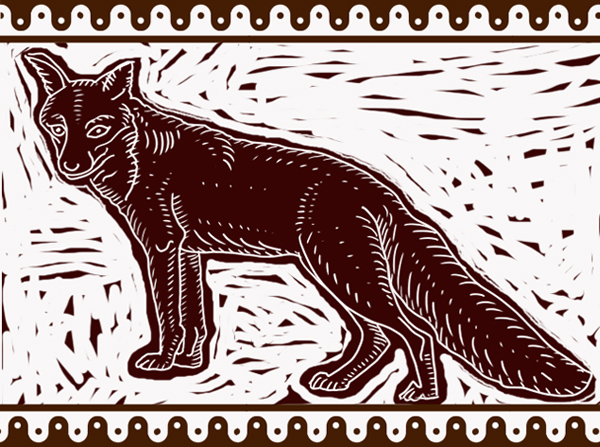
In a deep jungle, an ageing lion king took ill. News of his illness spread across the jungle among his animal subjects, and soon all animals started gathering before the lion’s den to pay their respects and enquire after his well being. Mr Fox was too engrossed chasing hens on a nearby farm and did not think his absence at the gathering would get noticed by the lion king. “ No one will miss my presence if I don’t pay a courtesy visit to the King, who any way may die soon”, so thought Mr Fox. But Mrs Fox was a meddlesome woman, she noticed that her husband had skipped his duties and was happily hunting hens on the nearby barnyard. She was a great gossipmonger and could not withhold secrets. So when she went to pay her respects to the lion king, she whispered in his ears how her husband had erred by not showing up to check on his health. The lion was incensed to learn about the uncivil behaviour of Mr Fox. Though ill and weak, he gathered his strength and roared “Guards! Bring that rascal fox before me! He shall pay for his uncouth behaviour towards his king”. Two tigers who were the king’s guards bolted through the jungle in search of Mr Fox.

Meanwhile, Mr Fox got wind of King’s decree and his imminent arrest. “ This is all happening because of Mrs Fox ‘s habit of gossip-mongering. I must make her pay for this” mumbled Mr Fox grinding his teeth in anger. He then set out with an empty burlap sack on his back collecting paper scraps and notes strewn on the streets. Soon he had collected enough papers chits to fill the sack. He reached home and waited to pretend to read each and every paper chit with great care as if he was searching for some important solution. As he was busy scanning through the paper notes, the two tiger guards reached his home and announced “ Mr Fox, You are under arrest. You will face a trial before the lion king’s court for showing disloyalty and disrespect towards your King. You are hereby arrested for treason.”

Continue reading

December 22, 2019by admin
FacebookTwitterPinterestGoogle +Stumbleupon
Page 5 of 16« First...«4567»10...Last »

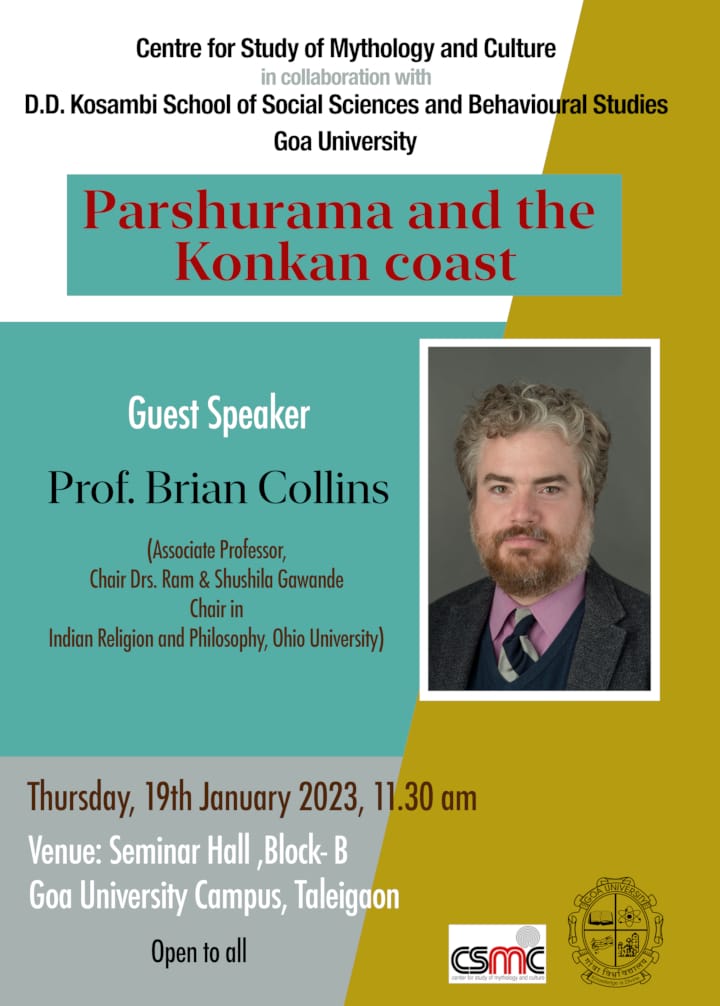
…Current Event…

JANUARY 19, 2023

….Recent events….

October-2022


September-2022


October-2021


A CSMC Initiative

"To tell a story is to discover or reveal a secret"- A.K.Ramanujan

© 2015 copyright Talking Myths  All rights reserved
Website Developed by Raj Trivedi