Talking Myths - An online archive of traditional tales from Indian subcontinent
  • Home
  • About Us
    • About Talking Myths Project
    • Team Talking Myths
    • Contributors
    • Associates
  • Archives
    • Categories
      • Folktales
        • Folktales from Mahabharata
        • Folktales from Ramayana
      • Myth
      • Legend
      • Beliefs and Traditions
      • Taboo
      • Didactic Tales
        • Fables
        • Jataka Tales
        • Panchtantra
  • Share a Story
    • Terms & Conditions
    • Upload Story
    • Submission Criteria
  • Index
    • Source
    • Authors/Texts
    • Location
  • Lectures
  • Blog
  • Events
  • Contact Us
  • YouTube
Home
About Us
    About Talking Myths Project
    Team Talking Myths
    Contributors
    Associates
Archives
    Categories
    Folktales
    Folktales from Mahabharata
    Folktales from Ramayana
    Myth
    Legend
    Beliefs and Traditions
    Taboo
    Didactic Tales
    Fables
    Jataka Tales
    Panchtantra
Share a Story
    Terms & Conditions
    Upload Story
    Submission Criteria
Index
    Source
    Authors/Texts
    Location
Lectures
Blog
Events
Contact Us
YouTube
  • Home
  • About Us
    • About Talking Myths Project
    • Team Talking Myths
    • Contributors
    • Associates
  • Archives
    • Categories
      • Folktales
        • Folktales from Mahabharata
        • Folktales from Ramayana
      • Myth
      • Legend
      • Beliefs and Traditions
      • Taboo
      • Didactic Tales
        • Fables
        • Jataka Tales
        • Panchtantra
  • Share a Story
    • Terms & Conditions
    • Upload Story
    • Submission Criteria
  • Index
    • Source
    • Authors/Texts
    • Location
  • Lectures
  • Blog
  • Events
  • Contact Us
  • YouTube
Talking Myths - An online archive of traditional tales from Indian subcontinent
Beliefs and Traditions

Brahma’s Abode


Traveling through the dense forest of Sattari Taluka of north Goa, you are literally transported to the scared time when the gods might have created this universe . The virgin landscape makes you wonder if lord Brahma created this universe from this very same place.

We went searching for the Brahma temple hidden in this virgin forest land. As you take a turn towards a narrow single lane road tucked within this dark forest, a signboard points an arrow to Nagargaon, a small sleepy village in Valpoi.  Yet another signboard points towards to the temple of Brahma, one of the few temples dedicated to god Brahma in India. Though Brahma is a significant god in the triad of gods Brahma, Vishnu, and Shiva, as the one who created the universe,  who sustained the universe, and who destroys the universe,  he is somewhat relegated to a minor status in latter part of the development of Hindu Pantheon, almost wiping out his presence.

According to a popular lore, when Brahma uttered the lie of finding the tip of Shiva’s linga during the Lingodbhava episode, it infuriated Shiva who then cursed Brahma that he will never have a cult of his own. Since then, the worship of Brahma has faded out from Hindu religious charter. Indeed, one finds very few Brahma temples across India, the most popular one being at Pushkar in Rajasthan. The other few examples of Brahma temples are found in the state of Gujarat, Andhra Pradesh, Uttarakhand , Madhya Pradesh and Goa. However unlike Shiva, Devi, or Vishnu temples, these temples are not popular among the masses. In Goa at Brahma-Karmali there is a unique shrine independently dedicated to god Brahma, while at Kolamb, Parshe and Pedne villages in Goa Brahma idols are part of the parivar devata or ancillary deity.

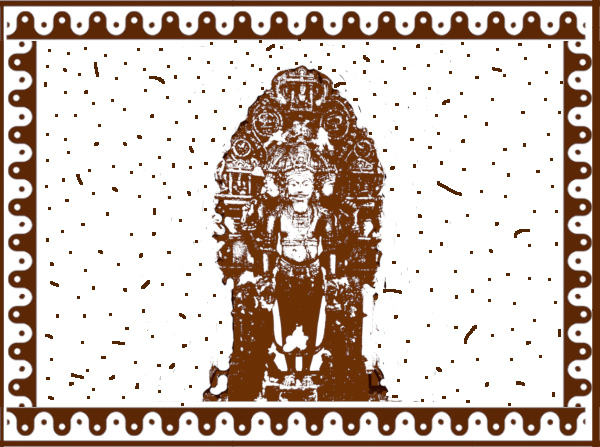
As you enter the narrow village lane leading towards the shrine, you find the temple of Brahma standing unassumingly by the road side. There is no porch or grand entrance leading towards it. As you climb the few steps to enter the temple, one notices new constructions and renovation work taking place. When we approached the shrine it was empty and a lone pujari was sweeping the floors of the garbhagruha getting ready for the morning puja. There is no pomp or grandeur to this shrine. What strikes you most is the intricately carved idol of the Brahma. Standing six foot tall, the four faced bearded god has four heads. His fourth head is placed at the back . There is a magnificent prabhavali around the deity. By his side there are two female deities Savitri and Gayatri beautifully carved in black stone. One can see dancing attendants along with a pair of swans on either side of the prabhavali, swan being the vahana of Brahma. Of the four hands of the deity, two are visible from the front of and two remaining hands are seen at the back. There is a water-jug ( kamandalu) and aksha-mala, sacrificial instruments such as shruk and sruva and a book or pustaka in his hands.

It was evident there are hardly any visitors to this shrine. The temple consisted of a small garbhagruha and a sabhamandapa with a small stage facing the idol,  the typical Goan style of temple architecture. The idol is probably from the Kadamba period from 12th BCE and it stands apart from other temple idols for the intricacy of the carving.

There is a curious lore attached to this temple about how this idol was brought into this village in 16th C. During Portuguese colonisation of Goa, many Hindu shrines were destroyed, as part of the inquisition. Thus Hindu devotees shifted the idols of the gods to a safer regions where Portuguese rule had not yet established itself. The story of Brahma Karmali idol comes from this period. Originally the idol was stationed at Karmali village near Old Goa. When the locals got the news that the Brahma temple might get destroyed, a brahmin decided to transport the idol of Brahma in a bullock cart to Maharashtra via Belgavi. At sunset he reached Nargarzar village in Sattari district. He decided to make an overnight halt and start his onward journey next day early morning as soon as the day breaks. He kept the idol hidden wrapped in a jute sack and he rested under the Kadamba tree. That night he dreamt of god Brahma telling him that he had liked the village and would like to stay there. The Brahmin ignored the dream and at day break as he got ready for his onwards journey he tried to lift the idol but he could hardly move it. The idol had become so heavy and had got stuck to the ground and would not budge inspite of great effort. Brahmin realised it was not just a dream, but a command from god Brahma. He gathered the villagers and requested them to install the deity in the exact spot, where it was kept on the ground . The villagers agreed and built a small shrine for the god and named the temple Brahma Karmali i.e. Brahma who came from Karmali village.The idol still stands today in the same place where it was installed years ago, although the shrine has undergone through the process of renovation in last 300 years.

Thus every year on the third day of Margashishya month as per Hindu calendar, the temple celebrates its foundation day.

Story collected by : Vidya Kamat
As narrated by : temple priest- Sandip Kelkar
Location: Nagzar, Valpoi , Goa
Image Copyright: Vidya kamat

January 1, 2023by admin
FacebookTwitterPinterestGoogle +Stumbleupon
Beliefs and Traditions

The Day of the Bhuta- ‘Gav- palan’


Every village in India has its own peculiar rites and rituals connected with their village deity. Such rituals are unique and are intrinsically linked to the identity of the village deity and its people.
Sindhudurga district, known as south Konkan region of Maharastra, has one such peculiar ritual called ‘Gav -palan’ literally meaning “ Running (away) from the village”. Why do people want to run away from the village? And from whom are they running away?

Let us find out.

This unusual practice of ‘gav- palan’ is practiced in Chindar, Achara, and Vaigani villages of Sindhudurg district. No one knows how old is this practice, but during ‘gav- palan” ritual for three days and three nights the whole village moves out of the village (runs away from) and temporarily settles down  outside the village boundary. All the communities belonging to various religious sects take part in this ritual of temporary exodus. Gav-palan ritual takes place every three years. The village elders along with various community heads, chief priest of the shrine and the oracle who is the medium between the man and the god, gather at the shrine of Shri Ravalnath- which is the main deity of Chindar village. Villagers then consult Ravalnath through the oracle for his permission to conduct the ritual of gav-palan’. If the God responds positively through the oracle, the ritual date is fixed by the chief priest of the village. On the day of “gav- palan” a group of men begin drumming a huge drum to announce the time to shift out of the village. People immediately gather all their family members along with their livestock and pets and enough ration and firewood for three days. Locking their homes they place a coconut leaf mat in-front of the main-door indicating the house is now empty and no living beings are inside the house. Thus for three days and three nights the whole village turns into a ghost town with not a living thing in sight. Why would the whole village abandon their homes for three days and three nights with no living creatures left behind?
The village elders explain the origin of this ritual through this tale.

The lore says – long long ago, an evil spirit in the form of a wild boar (varah) started troubling the villagers of Chinder by destroying their plantations and killing people. Tired and frustrated by the wild boar’s evil deeds people left the village. But an old lady who was too old to walk, stayed behind in the village. She lived alone in the Chinder village. One day a man and his nephew who had lost their way in the jungle while hunting landed in Chindar village in the night. When they saw the old lady’s home they approached her for night shelter. The old lady welcomed them and gave them food and shelter. She also told them about the evil spirit- a wild boar, and his evil deeds . The man and his young nephew reassured her that they would eliminate the boar and bring peace to the village. They killed the boar and eventually settled in the village of Chinder. Village also came to be known as “Mama-bhachyache ganv” meaning ‘Village established by the Uncle and his Nephew’ in local parlance. However, the wild boar was the leader of the bhutas and pishachhas or the evil spirits and goblins. The spirits then approached the village god Ravalnath asked him  “Now that our leader is killed, where do you want us to go? We have no place to live?” Ravalnath assured them that the villagers will leave the village for three days and nights when bhutas can occupy the village on those days. Thus the ritual of ‘gav-palan’ was established. It is believed by leaving the village for the ghosts and other spirits for three days, God Ravanath made a pact with the spirits to establish peace in the village.

Interestingly another ritual conducted by the end of the three days period is called as ‘dev-palan” literally meaning “running (towards) the god”. As the three day period comes to an end – the village elders along with priests and the oracle go to the Ravalanath temple. There they consult the god again asking his permission for the villagers to return to their homes. As the god agrees, people start returning to their homes; but then the oracle scoots away to the village boundary. The village head, priests, shamans follow the oracle. This act is called as ‘dev-palan’ running towards the god or seeking the god. For the next three days and three nights. The village head consults the god Ravalnath through the medium of oracle on problems related to village administration. God Ravalnath, thus resolves the issues by speaking through the medium.

This unique rituals of ‘Gav-palan’ and ‘Dev palan’ brings people and communities together for three days and nights. Families and friends enjoy it as a family outing playing , singing and cooking special foods.
Story collected by : Vidya kamat
As narrated by : Makarand Kelkar
Location Sindhudurg- Maharashtra
Image Copyright :Vidya kamat

January 1, 2023by admin
FacebookTwitterPinterestGoogle +Stumbleupon
Beliefs and Traditions

Festival of thieves- Chorotsava


Have you heard of a festival dedicated to thieves?

That’s right ! That is ‘Chorotsava’ or the festival of thieves. This unique festival is held every year in Goa, especially in the villages of Zarame and Caranzol , located in deep forest regions in Valpoi district of North Goa.

The name of the festival was so intriguing that we decided to witness the festival, which takes place every year on the second day after the Holi festival, in Zarme village and a week later at Caranzol. Holi is part of Shigmo festival in Goa and south Konkan. It is a major festival of the region as it coincides with the harvesting season. At Zarame village, Shigmo festivities consists for five days. Holi is celebrated on the first day, second day is celebrated as Chorotsava, then comes Ghodemodani, and Palkhi. On the fourth day phool padne rituals are performed and Shigmo festivities ends with celebrations of karavali *.

Chorotstava takes place on the second day, after the sunset often stretches late into the night. When we approached the village temple it was early evening, and there were hardly any people around. We walked towards the village temple and met some elderly men . “We have come to see Choran jatra ( festival of thieves)” We announced. “ It will take place in front of the temple very soon , hang around.” we are told, while they casually moved around the shrine discussing day to day politics. Soon we see young boys digging holes in the ground and a pandal being erected in front of the Kelbai- Sateri temple which is the chief village deity of Zarme. The temple seem to have been recently renovated with funding provided by the local politician. So does the houses nearby that look newly constructed and painted, with brand new cars parked in the porch. The village looked prosperous with new modern amenities.

There is a narrow space in front of the temple which is called “chavhato” or ‘mand’. It is a sacred open space where all the important religious activities of the village take place. On the day of Holi, the villagers go into a ‘sacred forest’ to fetch the a pole which will be ceremonially planted in front of the temple, for the celebration of holi or bon fire. Under the supervision of the chief shaman or ghadi, a tall tree measuring 15-20 ft tall is chosen from the sacred forest and after offering a prayer and asking its permission to be cut, the tree is felled. Having cut the tree it is brought to the mand area to be planted as a pole before the temple. This is called as ‘Holicho khamb’ or sacred pole. The branches of the tree are cut away leaving only the only the main trunk,  which is then decorated with mango leaves.

Rajaram Bhikaji Gawas age 70, is the main elder (or jaankar) of the village and in charge of conducting Chorotsava. In a very solemn tone he informs us this is the true ‘history of his village’ and not a fictional lore for entertainment. “We enact the incident as it is very important for us as a community to remember our history. It is about justice. It is about our identity. If we forget the tale calamities would strike our community and we will get wiped out ”. Gawas  then revealed the story or itihas (history) as he stated.

Many years ago, a man- a sage from Kashi came into the deep jungles of Zarame, and decided to set up a village so that people can live there and flourish according to the ‘dharma’. The village had only a few inhabitants. One day late in the evening, a group of four men and two boys walked into the village carrying swords in their hands. Villagers mistook the group as thieves and attacked them and eventually killed them by beheading the men, but young boys were killed on a stake. It was a gruesome act and soon the news spread among nearby villages. Meanwhile the parents of the four men and two young boys, came to Zarme village. They identified their sons who were killed by the villagers. Heartbroken and devastated seeing the bodies of their sons, the old parents made a plea to the village head and the deity Kelbai Santeri. “ These are our sons. They are not thieves. They had some business in another village and were just passing through this village. How could you kill them? What about us, the old parents? We are rendered childless? What about their wives who are now widows? We seek justice for our innocent sons. Without justice, there is no salvation” cried the old parents before the council of villagers gathered in front of the temple ‘mand’. After much consultations village heads admitted that they had wrongfully killed four innocent men and two boys. The village headman admitted “ We cannot bring back your dead sons, but as an act of repentance the village of Zarame will always keep them in our memory  generations after generation .”  The headmen promised the old grieving parents. Since then Zarame village celebrates this event as “Chorotsava”or the celebration of thieves. Rajaram Gawas concluded narrating the tale by stating “ It is about Justice.(nyay karun dhakhavala) It is about dharma. Upholding justice is the seen as highest truth in this village/ We live by our principals and that’s why celebrating Chorotsavsa is so important to us”

As the evening approached an enclosure of cloth was made around the main pole of holiyecho khambh’. Behind the enclosure we could hear digging sounds as pits were being dug. Two wooden stakes were planted little distance away facing the enclosure. Few village men and boys dressed in the traditional attire of white shirt, and a purple dhoti ( called as sovale ,meaning sacred cloth)with orange patakha or headgear appeared behind the cloth enclosure. The enclosed area seemed to be the area where the main act was to take place.

Crowds started swelling as night fell. There were no bright lights besides the tiny LED bulbs that lit the temple and nearby buildings. The ‘ranmale’** performance began in the mand area. The village elder Gawas followed by bunch of young boys dressed up and decorated as monkeys, lions, and foxes carrying the cut branches and leaves entered the mand. They danced around the stakes shouting “Shabei! Shabei!!”

“Move back! Move back. Please make way” the village volunteers started pushing back onlookers, who had inched forward to watch the performance. After the brief Ranmale performance, some of the villagers carried in two young boys wrapped up in rough blankets. They seemed to be in a state of trance. They were made to sit on the stake with folded hands. As the scenario was set, suddenly a loud voice was heard and from the dark alley emerged an old couple crying out for help. Onlookers strained their eyes to catch the sight. The old man was dressed in a soiled shirt and trousers, and ceremonial headgear appeared to be a humble farmer . He was carrying a bow and an arrow, followed by a woman ( actually a man dressed in a woman’s clothing) dressed in a green traditional saree and carrying a bundle over her head walking silently behind her husband. It appeared that the elderly couple were strangers to the village . As the man approached the closed enclosure, he began to appeal in a sing song tune to the villagers. “I am looking for my sons who had gone missing” , he announced. A voice from inside the enclosure was heard responding to the elderly man’s call. For a long time there was an exchange of words between the voice and the elderly couple. The elderly man and his wife kept moving up and down the mand area making appeals to the people while searching for their sons. At one point the cloth covering the enclosure was lifted revealing to the onlookers the ghastly visual of the dismembered bodies of four men. There were four severed bodies, their heads severed from their bodies, lying on the ground. They were carrying swords in their hands . Few men standing besides each body were seen fanning the men. People rushed forward towards enclosure for a close look. In the dimly lit area, the whole spectacle was awesome. But before one could see the full the scenario carefully, the curtains were drawn hiding the whole scene from public view. The elderly man and his wife are heartbroken to see that their children were brutally killed. They entered the enclosure and started encircling the dead men, sometimes sitting besides each of them and grieving. The curtains of the enclosures were raised and brought down few more times for the onlookers to fully grasp the scene.

The villagers, young boys , men and elders entered the mand area beating drums and cymbal reiterating the promise to remember their sacrifice and deliver justice to their souls by keeping the memory alive. As they moved slowly around the the two boys who were planted on the stake, people began to disperse. Boys were taken down from the stake and the festival was officially concluded.

In the wee hours of morning another act is performed called ‘masti’ (mai sati), when the wives of the four men who were killed as thieves perform sati. Thus the sacrifice of the women ( enacted by men dressed as women) is also remembered and revered by the villagers.

As we return back to our homes we are still trying to make sense of the spectacular visuals that we witnessed during the ‘Chorotsava’ performance.

———————-

*Order of the festivities differ in Caranzol village but the activities of celebrations remain the same.

Karavali is celebration of the mother goddess in the her pre-pubertal years and is a symbol of fertility

** Ranmale is a folk performance of Goa

Story collected by Vidya kamat

As narrated by village headman : Rajaram Gawas

Location Zarame, District Valpoi, Goa

Image copyright: Vidya Kamat

January 1, 2023by admin
FacebookTwitterPinterestGoogle +Stumbleupon

…Current Event…

JANUARY 19, 2023

….Recent events….

October-2022


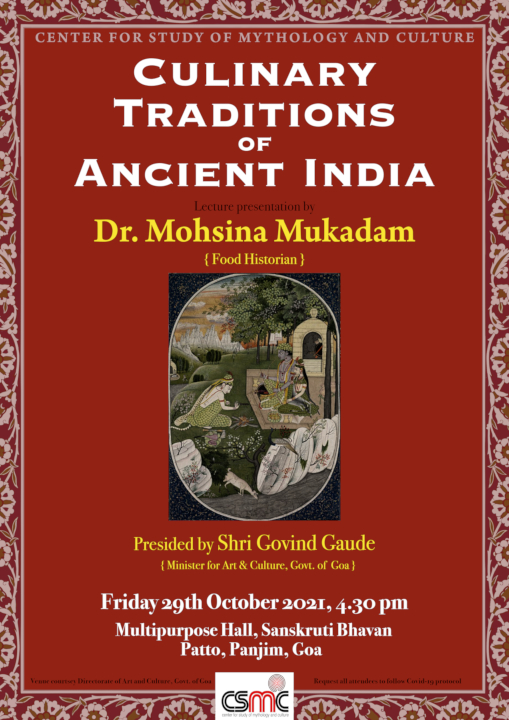
September-2022


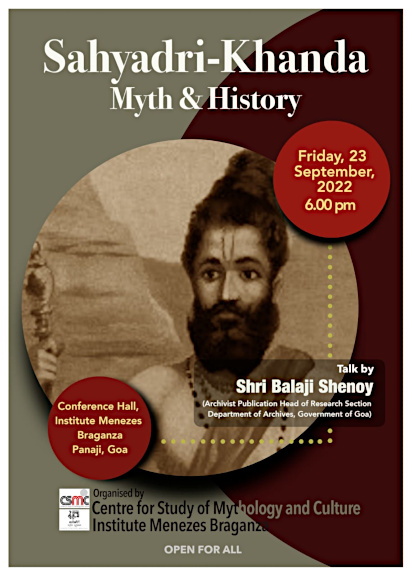
October-2021


A CSMC Initiative

"To tell a story is to discover or reveal a secret"- A.K.Ramanujan

© 2015 copyright Talking Myths  All rights reserved
Website Developed by Raj Trivedi