Talking Myths - An online archive of traditional tales from Indian subcontinent
  • Home
  • About Us
    • About Talking Myths Project
    • Team Talking Myths
    • Contributors
    • Associates
  • Archives
    • Categories
      • Folktales
        • Folktales from Mahabharata
        • Folktales from Ramayana
      • Myth
      • Legend
      • Beliefs and Traditions
      • Taboo
      • Didactic Tales
        • Fables
        • Jataka Tales
        • Panchtantra
  • Share a Story
    • Terms & Conditions
    • Upload Story
    • Submission Criteria
  • Index
    • Source
    • Authors/Texts
    • Location
  • Lectures
  • Blog
  • Events
  • Contact Us
  • YouTube
Home
About Us
    About Talking Myths Project
    Team Talking Myths
    Contributors
    Associates
Archives
    Categories
    Folktales
    Folktales from Mahabharata
    Folktales from Ramayana
    Myth
    Legend
    Beliefs and Traditions
    Taboo
    Didactic Tales
    Fables
    Jataka Tales
    Panchtantra
Share a Story
    Terms & Conditions
    Upload Story
    Submission Criteria
Index
    Source
    Authors/Texts
    Location
Lectures
Blog
Events
Contact Us
YouTube
  • Home
  • About Us
    • About Talking Myths Project
    • Team Talking Myths
    • Contributors
    • Associates
  • Archives
    • Categories
      • Folktales
        • Folktales from Mahabharata
        • Folktales from Ramayana
      • Myth
      • Legend
      • Beliefs and Traditions
      • Taboo
      • Didactic Tales
        • Fables
        • Jataka Tales
        • Panchtantra
  • Share a Story
    • Terms & Conditions
    • Upload Story
    • Submission Criteria
  • Index
    • Source
    • Authors/Texts
    • Location
  • Lectures
  • Blog
  • Events
  • Contact Us
  • YouTube
Talking Myths - An online archive of traditional tales from Indian subcontinent
Folktale

THE FOREST OF FEAR

The ‘Stri parva’ section of the Mahabharata narrates a story. In the story a Brahmin was journeying on foot, he comes to an impenetrable forest that scares him to death because it was teeming with huge, carnivorous beasts. Horrible, voracious beasts were scattered on every side, such as lions, tigers and elephants. When he saw this, his heart pounded wildly; his hair bristled and stood straight up. Running through the wood, dashing this way and that, looking out in every direction, he wondered, “Where can I take refuge?”. He searched for some opening among those beasts; racing forward in terror but, he could not get out, and he could not get far enough from the beasts. In some time he saw that horrible wood was surrounded by a net on every side, and that an absolutely horrible woman had embraced the wood with her arms. The large wood was dotted here and there with five headed snakes, lofty mountains that touched the sky like tall trees.
In the midst of that wood there was a covered up well; its opening was choked with vines that were hidden under the covering of grass. The Brahmin fell into that hidden well and got caught in the webbing of the vine’s filament. He hung there with his feet up and head down, like a big jack fruit hanging by the stalk. And then another calamity made things worse. He saw a large, black brindled elephant at the edge of the top of the wall. It had six faces and moved on twelve feet and it was gradually working its way over the well, which was covered by vines and trees. As the Brahmin clung to the branch of tree, at its end there were all sorts of frightening, horrible looking bees; they had gathered honey and were returning to their hive. Honey is the sweetest of all things…….A stream of this honey was flowing there constantly and copiously, and that man hanging there drank from that stream. But in this dire situation, as he drank it, his craving did not abate. Never satisfied, he kept wanting it again and again. And the man never lost hope for his life….though white and black rats were cutting at the root of the tree on which his hope of survival depended!
He was afraid of the wild animals on the periphery of the impenetrable wood, of the extremely ferocious woman, of the snake below him in the well, of the elephant at the rim of the well, and fifth, he was afraid that the tree might fall because of the rats. There was also fear of bees that were greedy for the honey.
This story is told by Vidura to Dhrtarastra. Dhrtarastra was not only physically blind, but is also blinded by the affection for his sons. After narrating the story, Vidura explains that this is an allegory of human existence. The impenetrable wood is the mystery of rebirth. From which it is difficult to get away. The wild beasts are mental and physical diseases that frighten men, the gigantic woman is decay of old age that destroys one’s beauty, and the well is human body in which the soul hangs. The great snake at the bottom of the well is all devouring time, which takes everything away from human beings. And the vine and plant that grew across the middle of the well are desires of the embodied soul to stay alive. The huge elephant moving around the mouth of the well is a year, his six mouths are six seasons and twelve feet are twelve months. The rats that were cutting down at the root of the tree were days and nights, the bees are numerous desires for pleasure and trickling honey is sweet juice of pleasure in which men drown.
This story presents a very grim picture of human existence. But forgetting the inevitability of the diseases, crippling old age and ultimate destruction of human body, we occupy ourselves in accumulating riches, which we may never enjoy. Like the man who is surrounded by dangers from all sides forgets the imminent threat and fragile existence of human being and enjoys the pleasure of drinking the trickling honey. Similarly the soul in human body is deluded by the desire of pleasure.
Story collected by: Dr Ravi Khangai
Source: Mahabharata
Location: pan India

Dr. Ravi Khangai, Assistant Professor, Department of History, Rashtrasant Tukadoji Maharaj Nagpur University, India.

February 1, 2015by admin
FacebookTwitterPinterestGoogle +Stumbleupon
Myth

Shiva’s Bride

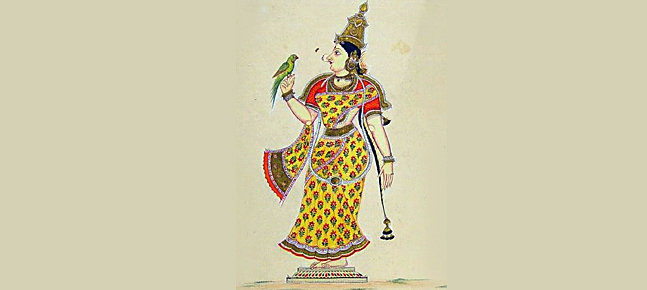
This is a temple tale from Madurai which explains how Minakshi the supreme goddess of Madurai fell in love with Lord Shiva.
The King of Madurai was childless and was distraught worrying about his successor to the throne. After much deliberation his priests advised him to perform one hundred horse sacrifices (asvamedha-s ) to gain highest spiritual merit or punya which would enable him attain a son as heir to the throne.
When he had completed successfully the ninety ninth sacrifice, Indra the Lord of heavens got alarmed. As he knew the hundredth sacrifice would dislodge him from his position of ruler of heavens, Indra appeared before the King and told him to perform instead the sacrifice of putra kameshti to obtain a son. The King took the advice and offered the sacrifice as per the rules, but to the amazement of all, a girl with a three breasts was born.
The King was troubled as he wondered how a girl with three breasts would carry on his legacy and rule the land? . Just then, a voice from the heaven advised him“ Oh pious King do not worry. Bring her up like a son. Teach her all the skills that are expected of a prince. When she meets the appropriate suitor, her third breast would disappear.”
Reassured by divine voice, the king named her Minakshi as she had the most beautiful eyes, like a pair of fish (mina= fish. aska= eyes). He brought her up like a son and taught her all the skills of a warrior. When the king died she ascended to the thrown. Minakshi- the princess was a fierce warrior and enemies feared her valor . No king could match her brevity and skills in war. Soon she set out to conquer the world.
In no time her army reached Kailasa and confronted the armies of Shiva. Shiva’s army were no match to Minakshi’s troops and began to loose the battle. Finally Shiva took to the battle field. A fierce battle broke out and Minakshi and Shiva came face to face. The moment she saw Shiva, she was transfixed and fell in love with the man before her. As the heavenly voice had predicted her third breast disappeared and Minakshi was overcome with modesty, innocence and shyness. The king’s advisor who had accompanied Minakshi immediately recognized that the prediction had come true. He approached Minakshi and said “Princess ! This man is your bridegroom” and explained to her the story of her birth.
Princess took Shiva to Madurai and married him in a grand ceremony. There Shiva reigned as Cuntarapantiya and ruled the land.

Story collected by : Vidya Kamat
Text source: Tamil Temple Myths, by David Dean Shulman, Princeton University, 1980
Location: Tamil Nadu
Image Details: Goddess Minakshi .
“Painting of the goddess Minaksi. She is depicted crowned, two-armed and with a green parrot perching on her right hand. An impression of perspective is provided by a lightly sketched in foreground. On-laid European paper watermark shows an armorial design and the letters ‘W T’.”
Artist : unknown
Image Source: Wikipedia

February 1, 2015by admin
FacebookTwitterPinterestGoogle +Stumbleupon

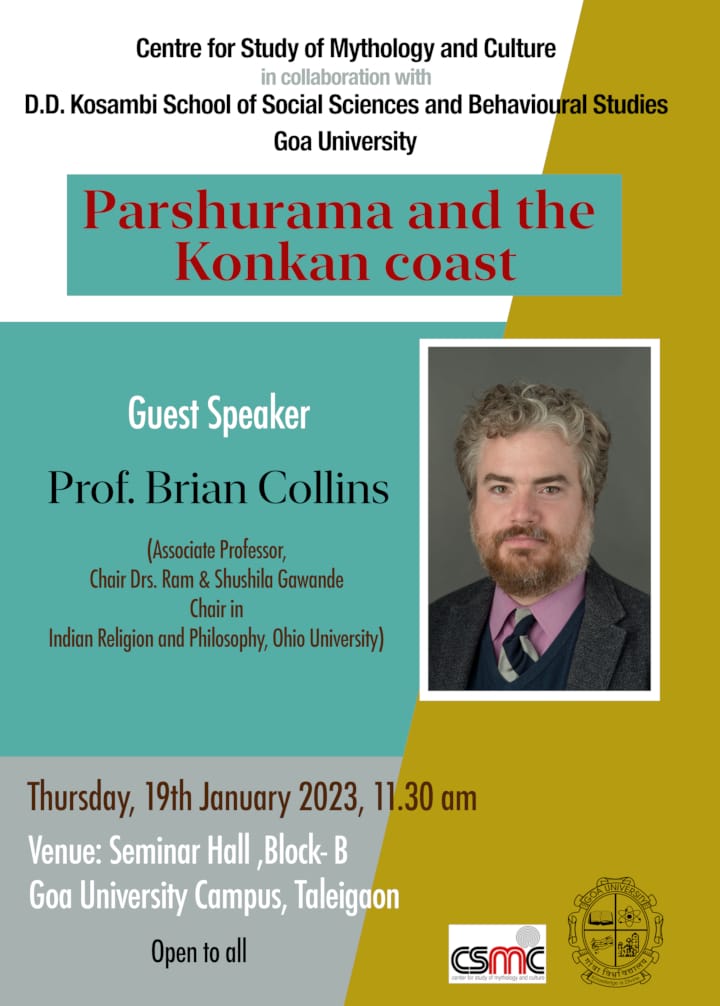
…Current Event…

JANUARY 19, 2023

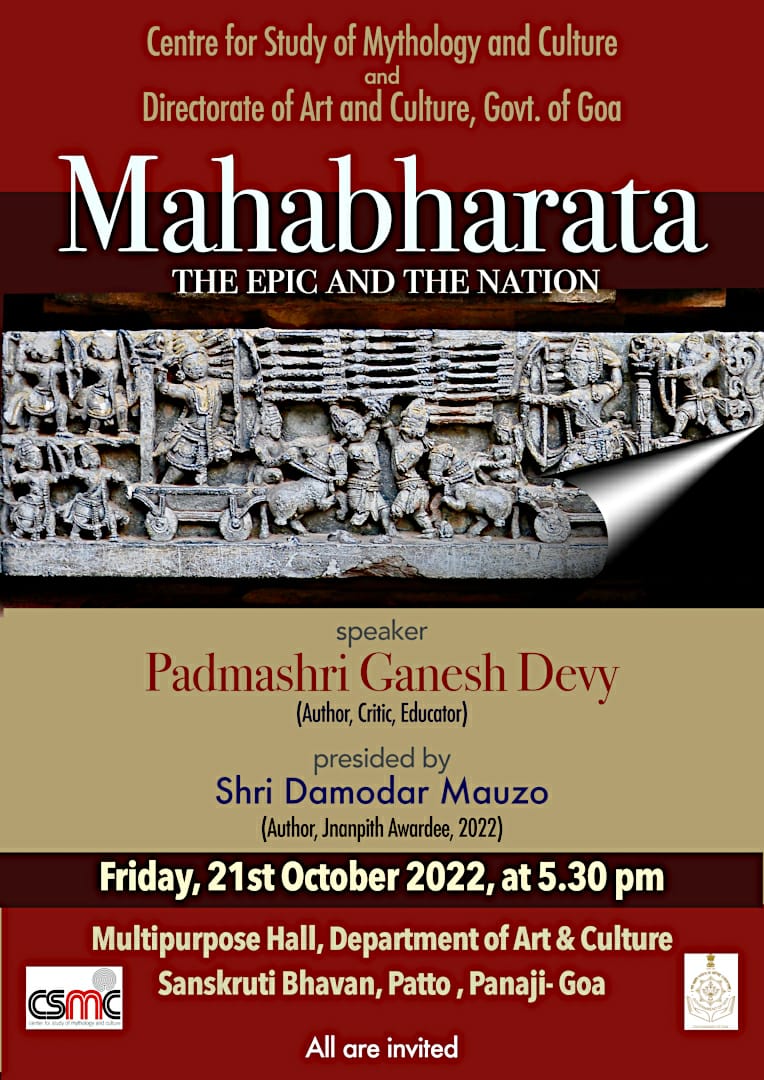
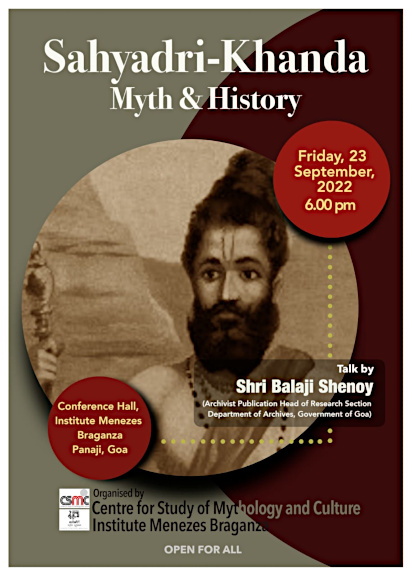
….Recent events….

October-2022


September-2022


October-2021


A CSMC Initiative

"To tell a story is to discover or reveal a secret"- A.K.Ramanujan

© 2015 copyright Talking Myths  All rights reserved
Website Developed by Raj Trivedi