Talking Myths - An online archive of traditional tales from Indian subcontinent
  • Home
  • About Us
    • About Talking Myths Project
    • Team Talking Myths
    • Contributors
    • Associates
  • Archives
    • Categories
      • Folktales
        • Folktales from Mahabharata
        • Folktales from Ramayana
      • Myth
      • Legend
      • Beliefs and Traditions
      • Taboo
      • Didactic Tales
        • Fables
        • Jataka Tales
        • Panchtantra
  • Share a Story
    • Terms & Conditions
    • Upload Story
    • Submission Criteria
  • Index
    • Source
    • Authors/Texts
    • Location
  • Lectures
  • Blog
  • Events
  • Contact Us
  • YouTube
Home
About Us
    About Talking Myths Project
    Team Talking Myths
    Contributors
    Associates
Archives
    Categories
    Folktales
    Folktales from Mahabharata
    Folktales from Ramayana
    Myth
    Legend
    Beliefs and Traditions
    Taboo
    Didactic Tales
    Fables
    Jataka Tales
    Panchtantra
Share a Story
    Terms & Conditions
    Upload Story
    Submission Criteria
Index
    Source
    Authors/Texts
    Location
Lectures
Blog
Events
Contact Us
YouTube
  • Home
  • About Us
    • About Talking Myths Project
    • Team Talking Myths
    • Contributors
    • Associates
  • Archives
    • Categories
      • Folktales
        • Folktales from Mahabharata
        • Folktales from Ramayana
      • Myth
      • Legend
      • Beliefs and Traditions
      • Taboo
      • Didactic Tales
        • Fables
        • Jataka Tales
        • Panchtantra
  • Share a Story
    • Terms & Conditions
    • Upload Story
    • Submission Criteria
  • Index
    • Source
    • Authors/Texts
    • Location
  • Lectures
  • Blog
  • Events
  • Contact Us
  • YouTube
Talking Myths - An online archive of traditional tales from Indian subcontinent
Blog

The sword over our heads

The last couple of years have been depressing for all of us who don’t relish being divided and manipulated by people who make a fetish of their racial/cultural purity and aggressively celebrate that purity/exclusivity to the point of causing harm and damage to those they see as the “lesser others”. It’s happening in the US with The Trump promising to “beat” all outsiders, it’s happening in Europe with the rise of far right-wing parties and it is also happening in our country with alarming regularity.

Every time I read these accounts, I am amazed how these demagogues of different affiliations fail to learn from the history of human society — not the history of wars, nor of major political significance, but the stories that make up the humdrum nitty-gritties of ordinary lives.

One only has to look back at myths and rituals across societies to realise that at the point of “end-use” or daily living if you like, we the people have always been syncretic. We borrow stories and heroes and symbols from our neighbours, whoever they may be, mixing tales and rites to cook up a rich medley that can inform our humdrum lives with meaning and serve our fears and insecurities with the comforting blanket of myths and legends.

Two myth and ritual examples from Bengal bear testimony to this “grassroots syncretism”. Both illustrate that when common people are faced with grave risk to life and livelihood, when visceral, gut-wrenching fear seizes the human spirit, we forget our faith-labels. We are united in the same primal urge to be safe and to secure our loved ones. Thus when the villagers of 18th and 19th century Bengal, whether Hindus or Muslims, grappled with the ever-present menace of snakes, both turned to the snake goddess Manasa and propitiated her with common rituals. In parts of East Bengal (now Bangladesh), boat races with songs that extoll the powers of Manasa as well as celebrate the love of Behula-Lokhindor were very popular among the boat-people in the riverine districts. Hindus and Muslims participated in these boat-racing ceremonies during the rainy season when the snakes are at their most threatening. In fact, P K Maity writes in his definitive socio-cultural study on the cult of Manasa that post 1947 many of the boat racing songs in and around Sylhet took on a more pronounced Islamic character as the overwhelming majority of the boatmen who had stayed back were Muslims.

Just as Manasa worship (still practiced in many parts of Bengal) shows how common people can be united in adapting and adopting rituals in the face of a common threat, the legend of Bonbibi in the Sunderbans takes this syncretic impulse even further. This mangrove-covered delta is full of physical dangers but none more fearful than the great Royal Bengal Tiger. In this land of impenetrable forests and treacherous riverine tracts, it is no wonder then that the people who tried to eke out a living – the honey trappers and wood cutters — were united in their awe of the powerful beast that prowled the mangroves.
From their encounters, from the battle for survival between Man and untamed Nature was born the myth of Bonbibi. She is the protector of the people who took on the evil Dokhin Rai and his tiger-army. To the villagers on the fringes of the forest, to the honey-collector and the fisherman, it did not matter whether it was Allah or Durga who was supposed to nourish their spirit with the elixir of true faith. What they needed was an immediate source of security, someone they could access without intermediaries and some symbols that could be of immediate relevance to both the communities. Bonbibi was the answer to their needs; similar to many mother protectors in the Hindu pantheon but her origin can be traced to Medina and a Sufi fakir, both Islamic in character!

Bonbibi is then “imported” from the Holy Land of the Muslims to this piece of Bengal and her mission is to protect all the inhabitants there, both Hindus and Muslims. Bonbibi accompanied by her twin brother, Shah Jongoli , restores a new order in the land after her battle with Dokhin Rai, clearly demarcating the extent of Dokhin Rai’s authority( untamed Nature) as well as defining the limits of what men(irrespective of faith and origin) can access and extract from that great forest. From all the accounts of the Bonbibi “palas”(local theatrical performances), it is not clear to me, at least, whether Dukhey, the young boy in whose defence Bonbibi fights the final epic battle is Hindu or Muslim. But the beauty of this Sunderbans legend is that this detail is immaterial!

The tale of Bonbibi, Dokhin Rai, Dukhey may not be as ancient as other world myths, but the purpose is certainly “mythic’. It is the story of how Man must co-exist with Nature, how we must respect the powers of Nature and the eternal hope of Man that the weak and disenfranchised (Dukhey) can triumph over the greedy and wealthy (Dhona) as there will always be the Divine Protectors who will uphold the righteous. But what adds to the significance of this archetypical myth are the elements that make it transcend the narrow boundaries of any one faith, that make it possible for people from either faith to claim it as their own and celebrate it even today in 21st century through many re-tellings and ritual enactments!

This then is what grassroots syncretism is all about — in the defining moments of birth and death, in the defining principles of how we will manage our symbiotic relationship with Nature, we are united in our strengths as well as our vulnerabilities. If only, we remembered it and nurtured this more, we would leave this world a better place for the coming generations.

RUKMINI GUPTE

August 1, 2014by admin
FacebookTwitterPinterestGoogle +Stumbleupon
Blog

The Severed Head of Ganesha

The question is – Why was Ganesha’s head severed and replaced with an elephant head?

Was it just an accident that Shiva beheaded Ganesha in the battle, not knowing who he was?

Not really.

If you look closely at the stories from Indian mythology that refers to severing of the head, it is apparent that severing of the head is a recurring pattern. For instance, the Rig Veda mentions Indra cutting off Dadhyanc’s head. While Shatpath Brahmana narrates how Vishnu’s head was ‘accidently’ cut off when ants gnawed off the strings of a flexed bow on which he was resting his head. The Gods then placed a horse head over Vishnu’s shoulders and named him Hayagriva. Shiva when humiliated by Daksha- his father in law, became furious and severed his head. He later replaced Daksha’s head with a goat head. One can count more than a few examples, that show the severing of human head and replacing it with an animal head is a significant mythological motif. Therefore, one can ascertain that Ganesha’s head being replaced by an elephant head is a deliberate mythological trope.

But what does this pattern symbolize?

Death and rebirth is a persistent motif in sacrificial rituals. It is clearly enacted in the brahmanical rite of passage like Uapanayan, where the young boy initiate has to symbolically pass through the cycle of death and rebirth.
In the upanayana ritual the boy leaves his parental home to go his Guru’s ashram for higher education – but only after he symbolically dies and is reborn as his guru’s child. (This ritual is conducted in a ‘womb hut ‘ or dikshitavimita , where the student ( shishya) is placed doubled up in a fetal position in his guru’s lap). Having performed uapanayana, the boy is considered as dvija or twice born, and this symbolic death is represented by shaving off his hair (rite known as chudakarman) which is equated to the severing of one’s head.

Ganesha is the son of Parvati and not of Shiva. (This is reversed in case of Skanda- Karttikeya who is the son of Shiva, and not of Parvati ) . According to the story- Ganesha took upon himself the role of a loyal guard to Parvati. When Ganesha blocked Shiva’s entry into Parvati’s abode even after learning that Shiva is Parvati’s husband, a battle breaks out and Shiva beheads him. An anguished Parvati reproached Shiva for ‘killing’ her son and Shiva agreed to bring him back to life by attaching a new head to Ganesha’s body. Here Ganesha the son of Parvati dies but is reborn to Shiva as his son, the elephant headed Ganesha. Shiva then establishes Ganesha as the head of his ganas as gananayak. By this process Ganesha completes the cycle of death and rebirth and becomes the son of Shiva and Parvati.

So is there any significance for the elephant head?

Puranic tales provide a variety of accounts to explain this anomaly, including a tale about how Shiva and Parvati assumed the form of elephants and made love and thus giving birth to Ganesha with an elephant head. The most common tale that gained currency is the one in which Shiva severs Ganesha’s head and replaces it with the elephant head. Some tales also ascribe the source of the elephant head to various supernatural elephant entities in Indian mythology, such as Indra’s mount- Airavata, or the demon Gajasura whom Shiva defeated in a battle.
The elephant symbol is well entrenched in the South Asian mythology , and can be traced back to the Mohenjodaro civilization. It symbolizes rain or the water element and is therefore closely linked to agrarian symbols of fertility. Ganesha’s elephant head therefore suggests his primary role as a fertility god. The popular Ganesha festival is primarily a harvest festival, and a celebration of abundance and prosperity. Being a fertility god, sacrifice and initiation are inherent in the character of Ganesha. This again reiterates why severed head motif is central to Ganesha’s identity.

VIDYA KAMAT

August 1, 2014by admin
FacebookTwitterPinterestGoogle +Stumbleupon
Blog

Mantra, Tantra and Devi

The Kamakhya temple in Guwahati has captured the people’s imagination for hundreds of years. Its tantalising tales of tantra, mantra and vashikaran and equally intriguing rites and rituals has lured in tourists, scholars and believers from across the world. The sanctum sanctorum of the temple is a cave which is devoid of any image. It has a natural underground spring which flows through a yoni-shaped cleft in the bedrock. The inner sanctum is a deep dark underground rocky chamber into which one descends by a flight of steep steps. The “Matra Yoni” which is inscribed on a rock is covered with silk sarees and is constantly moist by underground spring water.

The Kamakhya temple is considered to be a shakti peetha. This is one of the many stories associated with the temple (For the stories around the temple, read Kamakhya’s Web) but in every tale linked to the temple, there is an underlying element of devi worship. This suggests that this is a place of worship of woman divine or, the mother goddess. The temple remains one of the holiest sites in India for tantra practitioners who associate it with powerful creative force of the mother goddess.

Among the many aspects of the goddess celebrated here, there is one which celebrates menstruation. Devotees believe that the Devi menstruates during a unique festival called Ambubachi which is observed during the Indian month of Ashaad (towards the end of June). They believe that every year on the seventh day of Ashaad, the pool containing the uterus turns red. The temple remains closed thereafter for a period of three days. On the fourth day, the doors of the temple are opened for lakhs of pilgrims who throng the temple during this festival. Offerings to the goddess are usually flowers, but might include animal sacrifices. In general female animals are exempt from sacrifice, a rule that is relaxed during mass sacrifices.

Ambubachi (or, otherwise) festival kamakhya temple draws various Shakti and Shaiva tantra practioners recognised by their respective red or black garments. Whilst in orthodox Hindu rites and rituals male dominance is an accepted norm and a female is considered impure when she menstruates, Tantric rites grant female the status of Shakti, and she is considered to have the potential to unlock her divine powers especially during her menstrual cycle. Assam and its surrounding areas are well known for various Tantric Cults with their equally exotic practices. The Sanskrit term ambuvaci from which local Assamese term ambubachi or ambubasi is derived literally means “issuing for of water”. Whilst to believers it is celebration of menstruation of goddess kamakhya, the very celebration at the onset of monsoon in the month of ashaad is nothing but homage to fecundity of mother earth which comes alive with the onset of monsoon.

The history of Assam is closely linked to the history of Sri Sri Kamakhya. The Shakti temple is mentioned in various Puranas including Kalika Purana and Yogini Tantra which establishes the temple and therefore Assam as a springboard for Shakta Tantra. The temple stands between two ethnic hill groups – the khasis of the Austro-Asiatic group who follow the matrilineal system and the Garos. Sex worship and animal sacrifice was common amongst these tribal people in the ancient past. While on the one hand, the worship of the yoni of the goddess in Kamakhya represents veneration of procreative power of nature, on the other hand it stands as testimony to magical influence and continuation of tribal culture and non-Aryan practices. The temple snuggled in the verdant Nilachal hills thus symbolises the ‘fusion of faiths and beliefs.

ANURADHA DHAR BOSE

April 1, 2014by admin
FacebookTwitterPinterestGoogle +Stumbleupon
Blog

The monastery of the slit ears

Deep in the rolling hills outlying the Great Rann of Kutch, some 65 odd kilometres from Bhuj, is a centuries old Hindu monastery steeped in medieval traditions and customs, its actual age disputable. There is not another soul for miles; the only sound heard being that of the peacocks singing in the surrounding forests. Within the monastery’s thick limestone whitewashed walls a sole yogi, with a handful of companions, keeps an exclusive tantric monastic order alive—the Kanphata (slit ears) sect founded by the sage Dhoramnath.

The traditional founder of the Indian sect of slit eared yogis is Gorakhnath but in Western India, Dhoramnath, his fellow disciple introduced the Kanphata doctrines into Kutch at the end of the 14th Century. Legend claims that Dhoramnath stood on his head for 12 years on top of Dinodhar Hill, an inactive volcano behind the monastery, in self-imposed penance for a curse he inadvertently made. Upon being urged by the gods to cease his penance he agreed on condition that whatever his eyes first saw would turn barren. And thus the Rann of Kutch was created. A temple dedicated to him stands on the hill.

Shrines and vermillion smeared stones dedicated to yogis having taken samadhi dot the monastery grounds. While the monastery exteriors are plain, clad in limestone with vermillion marks, its interiors in contrast are a riot of colour. Walking through corridors, arches and rooms, I enter the inner sanctum of the main temple around which I circumambulate in pitch darkness. My exploration ends on the roof overlooking a sea of domes topping the shrines, listening to the birds sing to each other in a beautiful, almost eerie, surreal world. 🙂

The monastery, however, is unfortunately also derelict and falling apart. Which is sad, taking into consideration the colossal amount of heritage it holds in its midst, including an eclectic collection of colourful 18th Century Kamangari wall paintings and intricate jaali work on its walls.

Kanphata yogis worship the Hindu god Shiva and are distinguished by the large earrings they wear cutting through the hollow of their ears, hence the name “slit ears”. Seated cross-legged chatting with the resident yogi, he and his companions explain the sect’s emphasis on acquiring supernatural powers instead of following orthodox practices of prayers and meditation. Referred to as Maharaj, the yogi, I am told, is renowned in the region and community for his uninterrupted meditation during the full nine days of navratri. Apart from slitting their ears, the ideology of the Kanphata Yogis incorporates elements of mysticism, magic, and alchemy absorbed from both Shaivite (devotees of Shiva) and Buddhist esoteric systems, as well as from Hatha Yoga.

Dusk is starting to fall. As I stand amid the old, desolate, Prussian blue hills and flame smeared sky with silence for company, the magic of Kutch, today replete with tantric traditions and ancient fossils, the stark beauty of the place envelops me within its fold. Did I just say it was beautiful? Let me repeat it nevertheless, for words and images are not always sufficient in capturing or chronicling such moments. These are instead etched in our memories to turn our eyes dewy when we remember certain days gone by.

Blog RAMA ARYA


December 1, 2013by admin
FacebookTwitterPinterestGoogle +Stumbleupon
Page 2 of 2«12

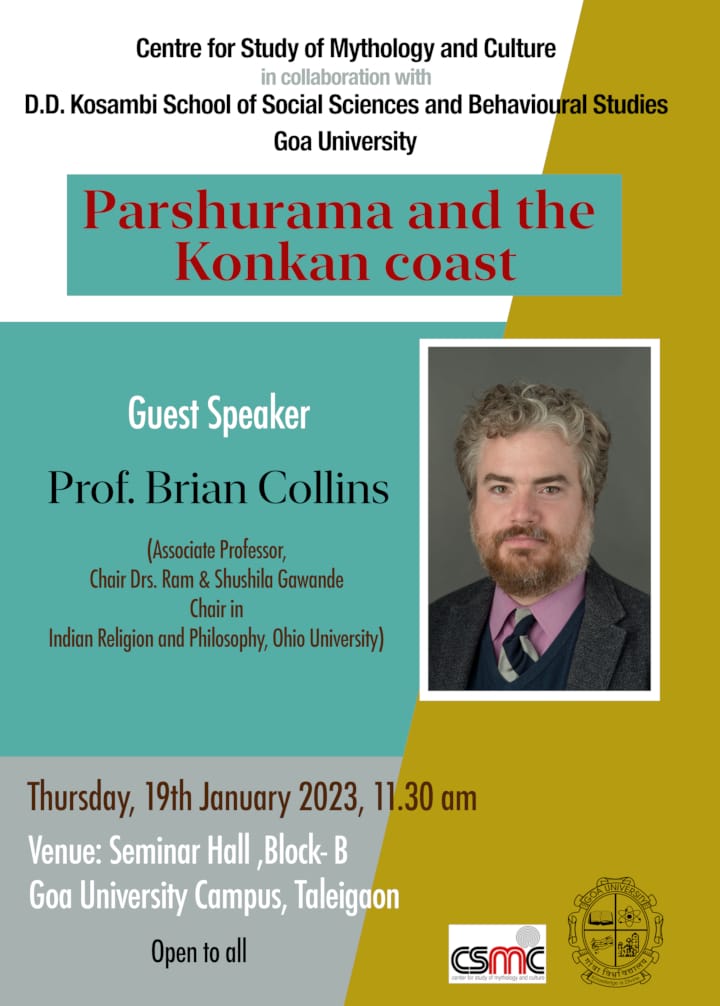
…Current Event…

JANUARY 19, 2023

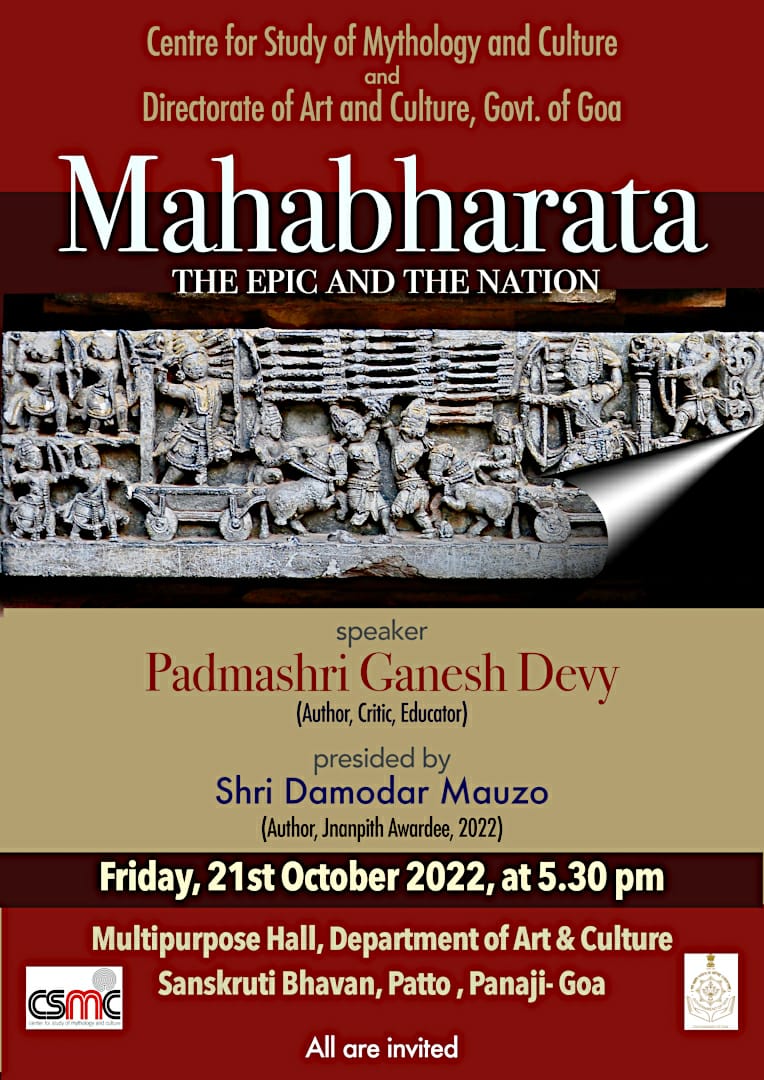
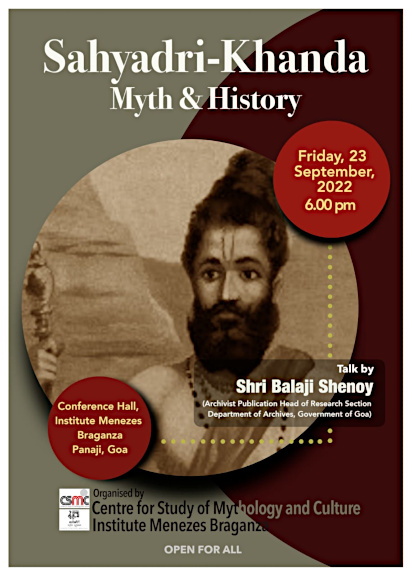
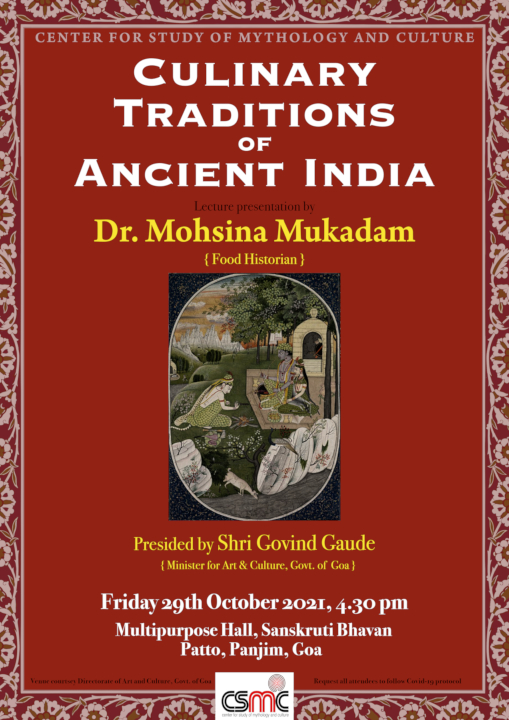
….Recent events….

October-2022


September-2022


October-2021


A CSMC Initiative

"To tell a story is to discover or reveal a secret"- A.K.Ramanujan

© 2015 copyright Talking Myths  All rights reserved
Website Developed by Raj Trivedi