Talking Myths - An online archive of traditional tales from Indian subcontinent
  • Home
  • About Us
    • About Talking Myths Project
    • Team Talking Myths
    • Contributors
    • Associates
  • Archives
    • Categories
      • Folktales
        • Folktales from Mahabharata
        • Folktales from Ramayana
      • Myth
      • Legend
      • Beliefs and Traditions
      • Taboo
      • Didactic Tales
        • Fables
        • Jataka Tales
        • Panchtantra
  • Share a Story
    • Terms & Conditions
    • Upload Story
    • Submission Criteria
  • Index
    • Source
    • Authors/Texts
    • Location
  • Lectures
  • Blog
  • Events
  • Contact Us
  • YouTube
Home
About Us
    About Talking Myths Project
    Team Talking Myths
    Contributors
    Associates
Archives
    Categories
    Folktales
    Folktales from Mahabharata
    Folktales from Ramayana
    Myth
    Legend
    Beliefs and Traditions
    Taboo
    Didactic Tales
    Fables
    Jataka Tales
    Panchtantra
Share a Story
    Terms & Conditions
    Upload Story
    Submission Criteria
Index
    Source
    Authors/Texts
    Location
Lectures
Blog
Events
Contact Us
YouTube
  • Home
  • About Us
    • About Talking Myths Project
    • Team Talking Myths
    • Contributors
    • Associates
  • Archives
    • Categories
      • Folktales
        • Folktales from Mahabharata
        • Folktales from Ramayana
      • Myth
      • Legend
      • Beliefs and Traditions
      • Taboo
      • Didactic Tales
        • Fables
        • Jataka Tales
        • Panchtantra
  • Share a Story
    • Terms & Conditions
    • Upload Story
    • Submission Criteria
  • Index
    • Source
    • Authors/Texts
    • Location
  • Lectures
  • Blog
  • Events
  • Contact Us
  • YouTube
Talking Myths - An online archive of traditional tales from Indian subcontinent
Folktales from Ramayana

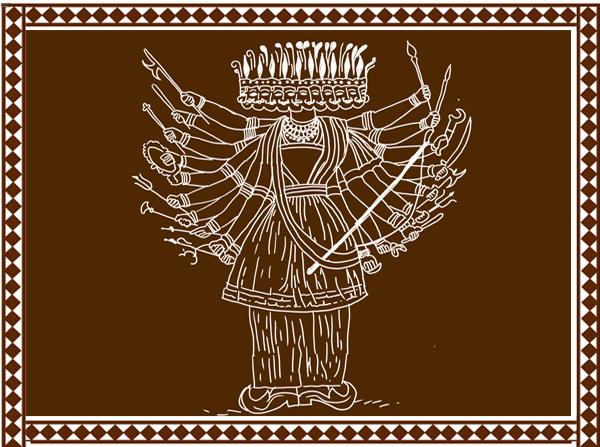
Ravana and Sita

In Goa, Ramayana is narrated during harvest festivals and folk performances such as, Jat , Val , Aarat, Chaurang, Taalen, Ranamale, Gavan Kaani, Fugadi , Ovi, and Gadya Ramayana which is a local version of Ramayana performance. It is a common practice across India, for folk performers to embellish and localise the main narrative of Valmiki’s Ramayana by inserting specific local details and episodes. The following episode from Ramayana sung and performed in the Canacona region of Goa is one such instance.

Once Guru and Ravana went into the forest for hunting animals. But even after spending a whole day they could not find any prey. Hungry and tired they fell asleep under a Jamun tree. Suddenly a huge bright shining jewel fell from the tree. Ravana and Guru woke up hearing the loud thud and found the precious jewel lying in front of them. Guru picked up the precious jewel and decided to present it to Indra-Kavalasa. Indra accepted the jewel, looked at it for a long time, then tied it in a holy red cloth and hung it on his wall.

Ravana became very curious about the precious jewel. “ I must have this rare jewel in my possessions,” he thought to himself. Greedy as he was, he quietly sneaked into Indra -Kavalasa’s home and stole it.

Continue reading

November 3, 2019by admin
FacebookTwitterPinterestGoogle +Stumbleupon
Folktale

Who Needs Shiva?

Once there lived a rich landlord in an Indian village. He was an arrogant and vain man who believed that no one can be greater than him. Not even Lord Shiva! to whom the whole village bowed with great reverence and devotion.

One day he decided to take the matters in his hands and establish his superiority once and for all. He asked the town crier to announce that from now on, no one should worship Shiva or sing praises or offer prayers to Shiva. Instead, people should invoke the landlord’s name so that they can get help and justice, because “ There can’t be any other saviour besides me” he declared to the villagers from the town hall. If any villager was caught praying to Shiva he was beaten brutally by the landlord’s men. The villagers continued living in fear of the landlord’s goons who terrorized them all the time. Finally, they could not bear the fact that they could not pray to Shiva, their beloved god! So they appealed to Shiva to resolve the situation.

Shiva heard the villagers’ cry for help and decided to teach a lesson to the landlord. Dressed like a wandering mendicant Shiva entered the village temple singing praises of Shiva. Soon he was caught by the landlord’s men and warned about uttering Shiva’s name in the village. But the mendicant would not stop. Guards caught hold of the mendicant and presented him before the landlord. The landlord shouted at the mendicant “ How dare you to disobey my orders! You talk of Shiva. But what has he done? I am the one who pays the workers. Gives them food and shelter and takes care of their sustenance. Think of me as your saviour, not Shiva.”

The mendicant went back to the temple, his body sore and in great pain. The Landlord decided to go about his daily chores. He had to go to the fields and keep an account of the yield produced by his vast farms. He told his wife “My dear, I have to inspect the work in the field. So I will come home late in the afternoon. Don’t wait for me, feed children and you too have your food. Let everyone have their food on time.”

As the landlord left the house, Shiva assumed the appearance of the landlord. He was a perfect lookalike of the landlord — mustache, height, complexion, and even the voice matched that of the landlord. No one could make out any difference. Shiva now entered the home as the landlord and immediately instructed his staff, “ I have just heard that there are imposters sneaking into the village. They may try to enter my home assuming my form and rob me. Be vigilant. Don’t be deceived, if you find any of them trying to enter my home throw them out and give them a good beating.” He then stepped into his room and closed the door. The landlord’s wife was surprised to see him back so soon. “ Oh dear! You told me you would be late for lunch. What happened?” asked the bemused wife. “I have a bad headache, so came home early. I am going to lie down and rest for a while. So don’t disturb me.” replied Shiva from the room.

Meanwhile, guards posted themselves at the gates with cudgels. By noon, the actual landlord returned from fields. Hungry and tired, he tried entering his home. The guards noticed him and stopped him, believing this must be the imposter the master told them about. They yelled “You scoundrel! Do you think you would fool us by dressing up like our master? You are an imposter!” They did not listen to his explanations and thrashed him black and blue.

Continue reading

October 21, 2019by admin
FacebookTwitterPinterestGoogle +Stumbleupon
Folktale

A Girl with Golden Hair


This is a popular folktale in Nepal.

Once upon a time a baby girl was born to the King and Queen of Nepal. The girl was exceptionally beautiful and to add to that, her hair was golden in colour. The King and queen became obsessed with her golden locks, and every night they would count each and every holden strand fearing a few of them might fall off and get lost. They even forbid her to tie her hair fearing her hair might get pulled off. The girl practically lived under house arrest. One day the girl despite her mother’s objection quietly went to the river to have bath. Unfortunately in the midst of her bath a strand of hair broke lose and floated away down the stream.

The King and queen became very upset and announced that whoever finds the lost strand of hair, would receive the princess in marriage. One day her younger brother who was a dimwit  managed to find the lost hair strand and brought it to the King.

The King was in a bind wondering how could he marry off his daughter to his own son? So he consulted his minister. After a long deliberation the minister advised the King to keep his word, because if he goes back on his word, his subjects would lose faith in him. The only way forward was to keep to his word and marry off his daughter to his son.

When the princess came to know that she is going to be married off to her own brother, she ran off from the palace into the jungle and climbed to the top of the tallest tree. The King sent his search party into the jungle to find her. They searched high and low and finally found her perched on the highest branch of the tallest tree in the land. They pleaded with her to come down. But the she refused to come down . She told them this marriage will bring disaster to the family. And she wove a tree house out of the branches continued to live on top of the tree.

As time passed her aged parents died. Finally the dimwit brother came to the tree where his beautiful sister was living. Instead of asking her to come down he asked her if he could come up to meet her. She agreed and let down her long golden locks from the top of the tree, so that her brother could grab on to the hair and climb up. As he kept climbing up towards the tree-house, he started feeling hungry. He asked his sister to give him some food to eat. The girl immediately prepared rice and beans, but warned him not to drop any grain on the ground. But her brother being clumsy, dropped a few grains on to the ground. Miraculously trees and herds of cattle sprang up from the fallen grain.

Continue reading

September 25, 2019by admin
FacebookTwitterPinterestGoogle +Stumbleupon
Folktale

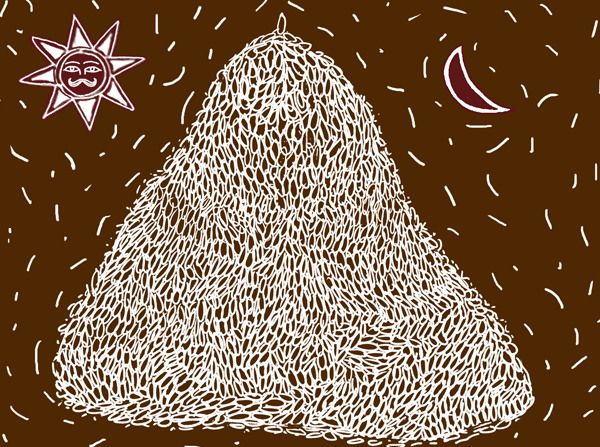
A Grain of Rice


Did your math teacher ever resort to telling you stories?
Mine did! And I never thought of it as a story about mathematics. For me it was just another story about a brave little girl, and I forgot all about it until  recently when I read how Warren Buffett, one of the richest men in the world was inspired by this very same humble Indian folktale and went on to create his astounding wealth on the simple principle of compounding in mathematics.

Long ago a King lived in the western region of India. He thought of himself as a wise King, and most of his subjects were poor farmers who cultivated rice as their main crop. One day the King thought “ These farmers grow so much rice. Where do they store their extra produce? Let me keep the extra rice in my granary for the safekeeping and if there is a famine, everyone shall have enough rice to eat, and no one will go hungry.”

So he sent out an diktat to his subjects stating that from now on all farmers will have to deposit their extra produce of rice in his granary, which would be given to them in times of a famine or any other calamity. Poor farmers trusted the King and deposited the extra grain in his granary. For a number of years, the monsoon was good and all the farmers had bumper crops. King’s granaries were soon filled to the brim with surplus grain.

But then came the year when it hardly rained, the paddy fields dried up and rice crop failed across the land. Farmers came to the court and requested the king to release the rice they had deposited in his granaries. The chief minister also implored “ Your highness! There is a famine in the country and people are going hungry and you had promised to release the rice grains during the famine. Now is the time to give back their rightful share of rice.” The King got angry and shouted back to the minister “ You Idiot! How can I release the grain to people when there is a famine? How can a King go hungry? Promise or no promise no grain can be be given to these farmers as I need it for myself”

Continue reading

September 8, 2019by admin
FacebookTwitterPinterestGoogle +Stumbleupon
Folktales from Mahabharata

Krishna and the Sabar tribe

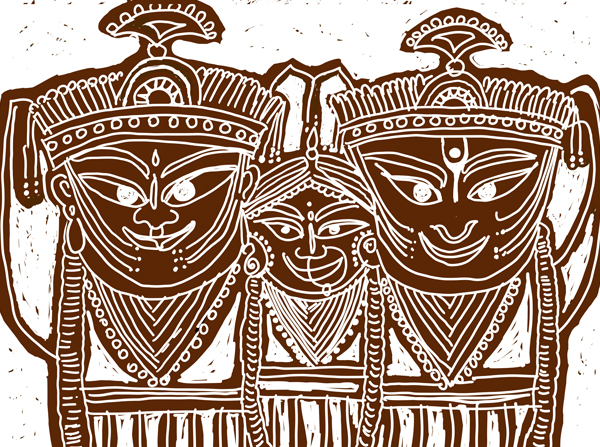
The Oriya poet Sarla Das from 15th C. reveals through his poetic works the not so apparent connection between Jagannath of Puri and Shri Krishna of Dwarka .

Das, a poet born in a farmer’s household wrote the Oriya version of Mahabharata, which is one of the first retellings of Mahabharata in a regional language. Written in dandi meter of bardic poetry, the characters in Oriya Mahabharata speak in the voice of tribal people. Although Sarla Das followed the themes and plots of the original epic, he also added folk stories, colloquialisms and depictions of local Oriya life in his telling of the Mahabharata.

The story of Jagannath is one such tale found in Sarla Das’s work in Maushala Parva of Mahabharata. The narrative begins at the point when the entire Yadava clan has perished in the war and Shri Krishna too has lost his life to the poisonous arrow shot by hunter Jara who mistook the reclining (sleeping) Krishna’s feet for the ears of a grasing deer. Das departs from the original story at this point and inserts the following story indicating Krishna’s association with Sabara tribe , hinting that Krishna as Jagannath could have been originally a tribal deity.

The story proceeds in this manner…

Arjuna while searching for Krishna in the aftermath of the war stumbled upon the dead body of Krishna. Grief stricken and heartbroken at the lose of his dearest friend, Arjuna tried to cremate the body according to the shashtras, but could not. Just then a voice from the heaven told Arjuna to float Krishna’s pinda* in the ocean. Ajruna with heavy heart obeyed the heavenly command and set Krishna’s pinda in the waters. Meanwhile Narayana ( Krishna) hid himself among Sabars** in the forest by incarnating himself as Madhava, and sabaras began worshiping him ( Krishna) in the image of Sabrinarayan. When the Vaishnavite King of Puri came to know that Vishnu/Krishna is living among the sabars, he sent an emissary to locate and retrieve him. The Brahmin Vasu, emissary of the King spend years searching for Madhava and finally succeeded in locating him. But before Vasu could formally request Madhava to accompany him to the King’s palace, Madhava vanished from view after advising Vasu to tell the King to install a stone deity at Puri.

Continue reading

August 25, 2019by admin
FacebookTwitterPinterestGoogle +Stumbleupon
Folktale

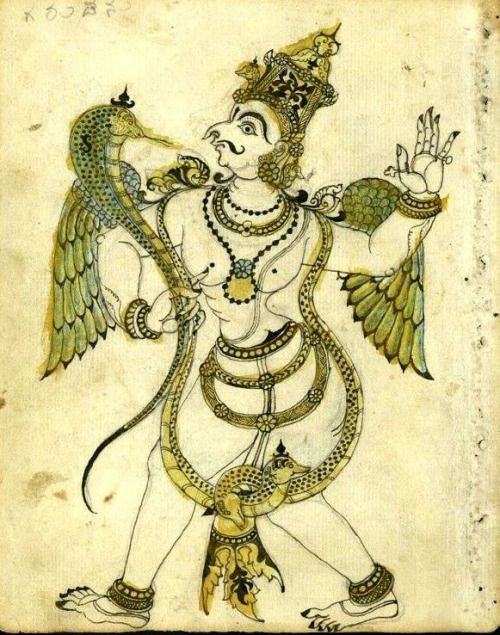
Bhujang and the Eagle Queen


Traditionally in Indian homes, women use grinding stones to mill flour. This laborious chore requires strength and long hours of back-breaking work and so they sing while milling the grain to overcome the tedium. These songs are known as ovi-s ( grinding stories) in Maharashtra and Goa.

The traditional mill consists of two heavy circular stones placed one on top of each other and turned by a wooden handle. While one woman pours the grain through the central slot the other turns the stone rotating it on its axis crushing the grain. Thus they take turns milling the grain and singing traditional tales. The following song narrates an unusual tale of two arch rivals and their uncanny camaraderie.

“Oh sister listen to my tale” sings the woman as she starts grinding the rice… ‘grrr’… ‘grrr’…’grrr’.. on the stone mill. “Once upon a time there lived a Cobra King by the name Bhujang on the mountain covered in the thick foliage of a rain forest. He lived up on the hill with his wife.” grr… grr.. grrr…” His wife was pregnant with his babies. But she was in the habit of travelling long distances. She would travel to various villages.” Women sang and the grinding mill would pick up the pace. “She would trudge along mountains and rivers and deep forests. The little babies in her belly would memorize the route she would traverse and Oh Lord! let me tell you! These babies would remember the old route. And when they are born they would take the same route that goes via Marcel to Old Goa, from Keri to Panjim”*. They would remember the route so that they could go back and forth as they please. But King Bhujang would never leave his abode. It was believed that the King would come down the mountain only when he got weak and feeble and is about die. So the King stayed put in his hole up in the mountains.”

“ Oh, sister! on the same mountain lived a Garuda( eagle) with his family.” The second woman would join the song adding to the tale. Garuda’s wife too was pregnant with a young baby. The enmity between Garuda clan and Cobras clan is an old one. Till today when they crossed each others path, they would exchange angry glances as if they were waiting to avenge the betrayal Garuda’s had meted out to the Cobras.** King Bhujang’s eyes would redden with anger and he would start hissing in resentment, with his forked tongue out ready to spew deadly poison on the Garuda. The Garuda in return would show him his razor-sharp talons ready to swoop over the Cobra King and tear him to pieces with his hooked beak. They couldn’t see each other eye to eye. Thus lived these two arch rivals on the mountain, waiting for the day to kill each other and avenge the betrayal.”

Continue reading

July 28, 2019by admin
FacebookTwitterPinterestGoogle +Stumbleupon
Folktale

Atul, Petul and an Idali


Atul and Petul were two sisters who lived on the outskirts of a village . Their parents died when they were very young, so they had to fend for their lives by themselves. During the day they would go to the nearby village and beg for food and return to their hut by night to sleep. One day an old lady gave them an idali * to eat. Both the sisters loved it so much that they decided to prepare it by themselves. They gathered all the ingredients. Soaked the lentils in the afternoon, and ground it sitting on the stone grinder. In the night they mixed the ground lentils with rice powder and kept it for fermentation. Everything was done as per the old lady’s instructions.

Next morning they got up early, with the thought of eating hot idalis. But Oh! No! There was no wood to light the stove! The sisters grabbed a machete and a rope and rushed to the nearby jungle to gather dry wood. “Chop! Chop! Chop!” Atul started chopping the wood from a tree. A dugout close to the tree was the home of a tiger. He heard the loud noise of wood chopping and crawled out. “ Whose that? Who is chopping off the trees?” roared the tiger. Atul and Petul froze in fear. A huge angry tiger was looming over them bearing his big fangs.

Continue reading

March 27, 2019by admin
FacebookTwitterPinterestGoogle +Stumbleupon
Folktale

Darkness to Light

There was a rich businessman in a small village of Tamil Nadu in southern India who had a daughter and a son. The brother and sister were very fond of each other. When the businessman arranged for his daughter’s marriage into a rich family, the sister promised her brother that if she had a daughter, the girl would be the bride of his future son (this is a common practice in southern states of India).  Soon the sister had three daughters and the brother in turn was blessed with three sons. With the passage of time, the old businessman died of old age, leaving behind a huge debt for his son to deal with. As a result, the creditors who had lent money to the father took away almost all the wealth leaving the son and his three sons on the brink of poverty.

Continue reading

November 8, 2018by admin
FacebookTwitterPinterestGoogle +Stumbleupon
Folktales from Mahabharata

A touchstone of true friendship

Is chastity a desirable virtue only for a woman? And is chastity all about sexual fidelity? This story from a Tamil version of the Mahabharata illustrates how true friendship between men can be an equally lofty virtue.

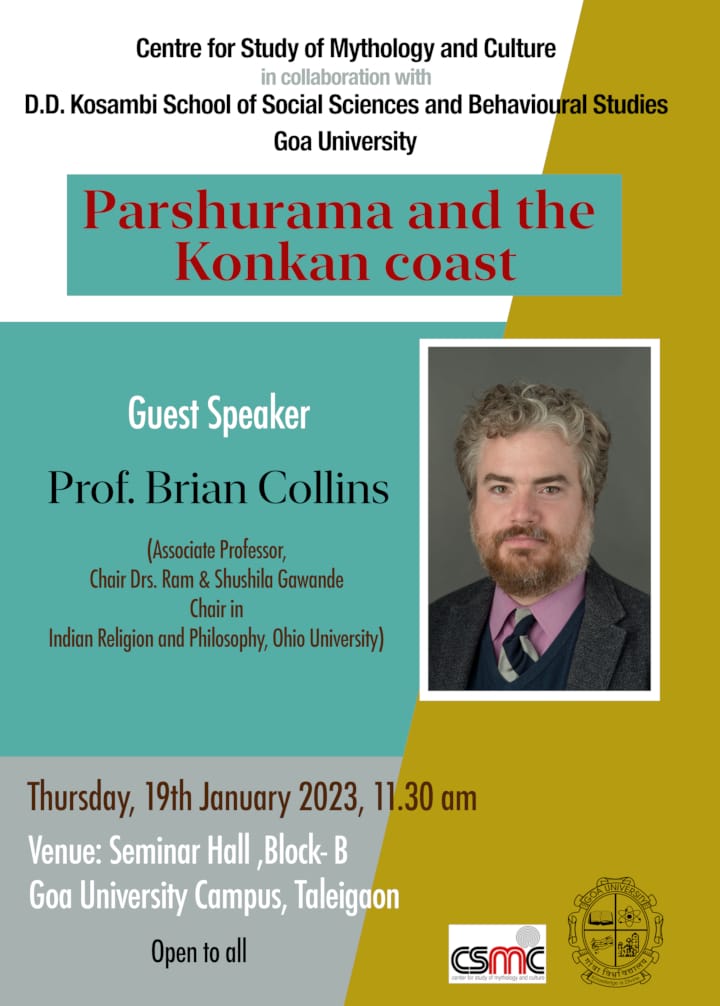
One day, in Hastinapura, in a rare moment of relaxation, Karna happened to be playing dice with Duryodhana’s wife, Bhanumathi in her harem. Duryodhana was, however, not present, as he was out attending to the kingdom’s affairs. Meanwhile, Karna and Bhanumati were thoroughly enjoying the game. But as time progressed, Bhanumati slowly started to lose to Karna.

Continue reading

July 15, 2018by admin
FacebookTwitterPinterestGoogle +Stumbleupon
Folktale

Devchar in a bottle

Ghost or spirit stories are very common across the world and in Goa, the coastal state from western India, Devchars are the most cherished spirit-gods. Devchar literally means- “The one who has gone the god’s way” in Konkani language.

Generally Devchars are considered to be benevolent spirits, known for their shape-shifting ability but they are also notorious for creating nuisance for people. Thus if someone is a trouble maker, then it is asked in jest “Has Devchar possessed you?” Although feared by children, elders know Devchar is a harmless and also a foolish spirit, who can be easily tricked. The tale shows how the memory of spirit–god is kept alive through folktales.

Continue reading

June 17, 2018by admin
FacebookTwitterPinterestGoogle +Stumbleupon
Page 3 of 5« First...«2345»

…Current Event…

JANUARY 19, 2023

….Recent events….

October-2022


September-2022


October-2021


A CSMC Initiative

"To tell a story is to discover or reveal a secret"- A.K.Ramanujan

© 2015 copyright Talking Myths  All rights reserved
Website Developed by Raj Trivedi