Talking Myths - An online archive of traditional tales from Indian subcontinent
  • Home
  • About Us
    • About Talking Myths Project
    • Team Talking Myths
    • Contributors
    • Associates
  • Archives
    • Categories
      • Folktales
        • Folktales from Mahabharata
        • Folktales from Ramayana
      • Myth
      • Legend
      • Beliefs and Traditions
      • Taboo
      • Didactic Tales
        • Fables
        • Jataka Tales
        • Panchtantra
  • Share a Story
    • Terms & Conditions
    • Upload Story
    • Submission Criteria
  • Index
    • Source
    • Authors/Texts
    • Location
  • Lectures
  • Blog
  • Events
  • Contact Us
  • YouTube
Home
About Us
    About Talking Myths Project
    Team Talking Myths
    Contributors
    Associates
Archives
    Categories
    Folktales
    Folktales from Mahabharata
    Folktales from Ramayana
    Myth
    Legend
    Beliefs and Traditions
    Taboo
    Didactic Tales
    Fables
    Jataka Tales
    Panchtantra
Share a Story
    Terms & Conditions
    Upload Story
    Submission Criteria
Index
    Source
    Authors/Texts
    Location
Lectures
Blog
Events
Contact Us
YouTube
  • Home
  • About Us
    • About Talking Myths Project
    • Team Talking Myths
    • Contributors
    • Associates
  • Archives
    • Categories
      • Folktales
        • Folktales from Mahabharata
        • Folktales from Ramayana
      • Myth
      • Legend
      • Beliefs and Traditions
      • Taboo
      • Didactic Tales
        • Fables
        • Jataka Tales
        • Panchtantra
  • Share a Story
    • Terms & Conditions
    • Upload Story
    • Submission Criteria
  • Index
    • Source
    • Authors/Texts
    • Location
  • Lectures
  • Blog
  • Events
  • Contact Us
  • YouTube
Talking Myths - An online archive of traditional tales from Indian subcontinent
Myth

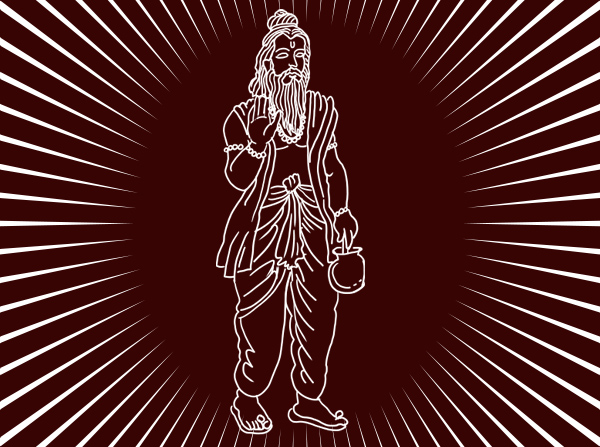
The Curious case of Sage Durvasa

Sage Durvasa appears in Hindu mythology as the angry sage who is always ready to put a curse on anyone who displeases him. People revered Durvasa only out of fear. For instance, the curse put on Shakuntala, daughter of nymph Menaka and sage Vishwamitra, that her lover king Dushyant would forget her is well known through literary texts.

Even the gods were not excluded from his ire as the sage is said to have cursed Krishna. When Durvasa visited Krishna, he desired that Krishna and his wife Rukmini should drag the chariot in which he was sitting to show their respect to the sage’s greatness. When Krishna and Rukmini started dragging the chariot, Rukmini felt thirsty. Krishna stopped the chariot and made Ganga change her course and come where Rukmini was standing, so she could quench her thirst. Durvasa became furious because Krishna did not ask his permission before bringing Gang, a and cursed Rukmini that she would be addicted to wine drinking and she would be separated from her husband Krishna.

Who was sage Durvasa? And why was he always so angry?

Continue reading

December 30, 2019by admin
FacebookTwitterPinterestGoogle +Stumbleupon
Myth

The Sacred Snake Grove


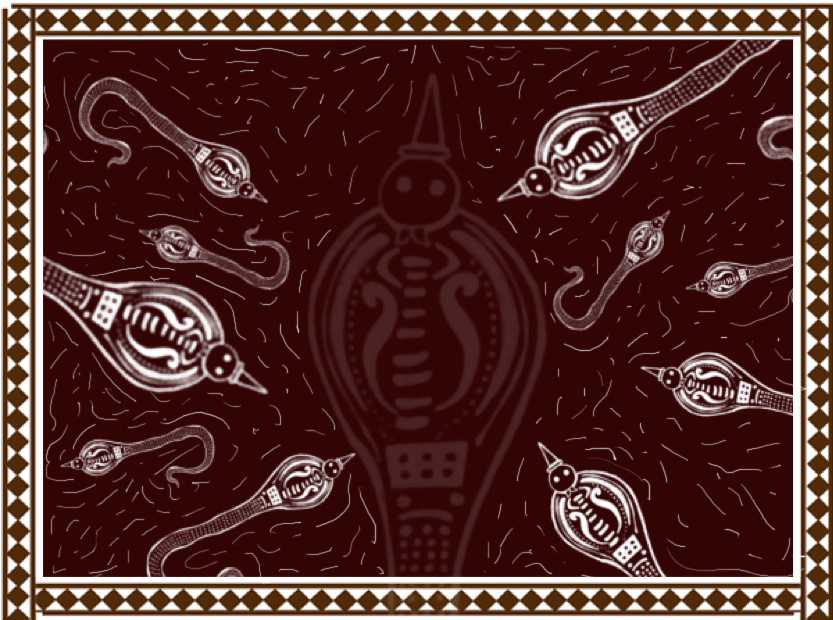
The Nagaraja temple at Mannarasala near Haripad in Kerala is unique in more ways than one and the most significant feature is the chief custodian of this temple is a woman. A priestess as chief custodian of a Hindu temple is a very rare phenomenon among the countless Hindu temples scattered across the length and breadth of the Indian subcontinent.

According to legend, the temple was established by Sage Parashuram and the deity is Nagaraja, the King of serpents embodying simultaneously two major serpent deities of the Hindu pantheon, Ananta and Vasuki. While Ananta is the great hooded serpent who supports and guards the supine body of Vishnu while he dreams the universe into existence, Vasuki the serpent king served as the churning rope during the churning of the oceans to bring forth the elixir of life-Amrita, and is found in the company of Lord Shiva, wrapped around his neck as a necklace. Interestingly, Vasuki is also known in Chinese and Japanese mythology as one of the “Eight Great Dragon Kings”.

Continue reading

November 22, 2019by admin
FacebookTwitterPinterestGoogle +Stumbleupon
Myth

Who was Mahishasura?

The tenth day of Navaratra is called Vijayadashmi or Dussehra, is celebrated as the day of triumph of Devi Mahishasurmardini over the asura, Mahisha. The story of Goddess Durga, or Katyayani and her victory is well known and popular. But very little is known about the asura she triumphed upon. Who was Mahishasura and what is his story?

Mahishasura is popularly represented in three forms – in his zoomorphic form he is shown as a buffalo, in the theriomorphic form he is supposed to have the body of a buffalo and the head of a man, and in anthropomorphic form he is shown in the form of a gigantic asura . Vamana Purana gives following account about the birth of Mahisha.

Sage Sindhudvipa, son of Suparshva was performing tapas on the Mandar mountain. Mahishmati the daughter of Viprachitti the asura and her gang of friends came strolling on a pleasure excursion to the vicinity of Mandara mountain. After a period of prolonged fun and frolic they decided to spend the night by the mountain. As they went around looking for an abode for their stay, they came across the beautiful hermitage of sage Sindhudvipa.

Mischievously they decided to threaten the occupant and take over the hermitage for their night stay. Thus they all assumed the form of fierce she buffaloes and attacked sage Sindhudvipa .
But sage Sindhudvipa was a seer, and through his yogic seeing he came to know that the buffaloes were none other than girls from asura clan. In a fit of anger, he cursed them to turn into she buffaloes for the rest of their lives. As soon as the girls heard the curse they realised the mistake of offending a formidable seer. They pleaded the sage to pardon them as it was just a prank, but alas! it was too late. Sindhudvipa finally took pity and gave a counter boon and said, they would return to their original form when Mahishmati the leader of the girl gang would give birth to a son.

Years passed, Mahishmati and her friends were once grazing on the banks of river Narmada.
Meanwhile, sage Sindhudvipa fell in love with a celestial nymph Indumati who was living by the banks of Narmada. The sage was so infatuated with Indumati that one day `he decided to meet her and express his love for her. But before meeting her he decided to take a dip in the river. Sindhudvipa was so excited with thought of meeting Indumati, that he dropped his seed into the river. When Mahishmati the buffalo drank the water from the same river, she swallowed the seed of Sindhudvipa and got pregnant. In due course she gave birth to a buffalo-son and named him Mahisha. Mahishmati and her friends were thus released from the curse of sage Sindhudvipa and gained back their original form.

Asura Mahisha grew up to become very intelligent and powerful asura on the earth. Eventually he became a threat to the existence of devas. To counter the threat of mahisha Gods decided to create Devi to destroy him. From the fire mountain formed out of the flames of anger from the eyes of Brahma, Vishnu, and Shankara emerged the Devi Katyayani, replendant as a thousand suns and having three eyes, with hair black as night and eighteen arms. Every god present there gave her a weapon for each hand. Shankara gave her trident, Vishnu a disc, Varuna gave her a conch , Agni gave her a dart, Yama gave her an iron rod, Vayu gave a bow, And Surya gave a quicker, Indra a thunder bolt, Kubera a mace, Brahma a rosary and water pot, Kala gave a sword and shield, Vishvakarma handed her battle axe and finally Himavan gave her a lion. Minor gods gave her different ornaments. Thus Devi-rupa or form was completed, and she went on to destroy Mahishasura.
———-
The story collected by : Vidya Kamat
Text: Elements of Hindu iconographyVo I part I by T. A. Gopinath Rao
Location: Pan India

Image copyright : Vidya Kamat

October 8, 2019by admin
FacebookTwitterPinterestGoogle +Stumbleupon
Myth

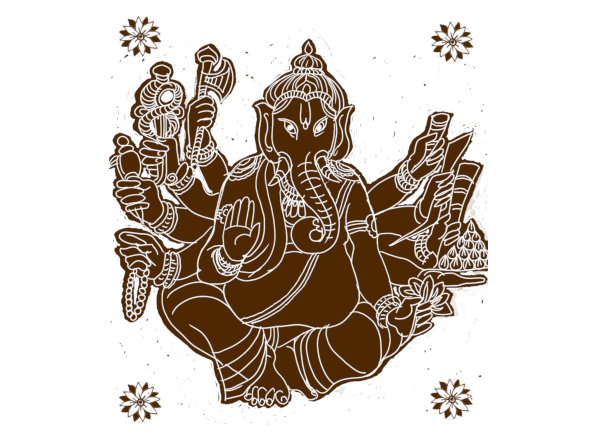
Ganesha the Gatekeeper

It is a common sight in India to find a Ganesha icon affixed above the main doorway of any Hindu household. It is believed that placing the icon of Ganesha at the doorway will stop evil forces from entering homes.

There are many stories highlighting the role of Ganesha as a guard or a gatekeeper. The most commonly known story is about how Parvati made a figurine out of the layer of dirt on her skin, breathed life into him and posted him in front of her house to guard her home as she went to have her bath. This is the tale which is commonly associated with the birth of Ganesha. But there is another version of the same tale in Skanda Purana, suggesting how Ganesha was created to guard the doorways of heaven.

Continue reading

September 1, 2019by admin
FacebookTwitterPinterestGoogle +Stumbleupon
Myth

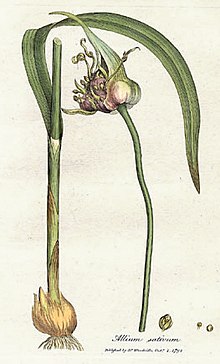
The Story of Garlic


We all know that garlic is an important ingredient in Indian cooking. According to Ayurveda, the medicinal and healing qualities of garlic makes it a remedy for many ailments. There is an interesting tale mentioned in the Puranas explaining how garlic came into existence.

In the beginning the Gods and asuras decided to find nectar or Amrita, the potion of immortality that would make them immortal. They knew this nectar was at the deepest level of the cosmic ocean and the only way to bring it out of ocean was by churing the whole ocean, and it was not going to be an easy task. So the Gods and asuras decided to collaborate on the task with the understanding that once they get the nectar they would share it equally among themselves.

To churn the cosmic ocean they needed a giant staff and a giant rope. Gods requested Vasuki the great Naga K ing to be the churning rope and mount Mandara was to be the churning staff. Vishnu assumed the form of a tortoise and dived deep into the bottom of the ocean and placed mount Mandara on his back to prevent it from sinking. Once these preperations were in place, Gods and asuras stood on either side of the Mandara and started churning the ocean using Vasuki as the churning rope.

As they kept churning the cosmic ocean, fourteen ratnas or treasures floated out of the cosmic ocean, these included Lakshmi, Apasara, Kamadhenu, Airavata, Uchhaishravas, Kaustubh, Parijat, Sharang, Chandra, Dhanavantari, Halahal, Shankh Jyestha and Kalpavriksha. The last ingredient to come out was the coveted Amrit, the pot containing the nectar of immortality. The moment the pot of nectar emerged out of the sea, Rahu an asura jumped down and grabbed it and took off running. The Gods chased Rahu and as they were about to grab him, he began to gulp down the nectar because he knew the gods could snatch it away from him. Indra, the leader of the gods, realising that Rahu had gulped a mouthful of nectar swiftly chopped off Rahu’s head before the nectar could reach his body. Thus the gulp of nectar Rahu had taken in his mouth fell to the earth. Out of this mouthful of nectar that fell many medicinal herbs sprung up and Garlic was one of the plants that germinated from the nectar of immortality.

According to the belief, Garlic is never offered as naivaidya or religious offering of food to the gods because garlic germinated from the nectar that fell out of Rahu the asura’s mouth.

The story collected by: Vidya Kamat
Story sent by Ranjana Ashok
Location : Pan India

Image Source; Wikipedia

August 5, 2019by admin
FacebookTwitterPinterestGoogle +Stumbleupon
Myth

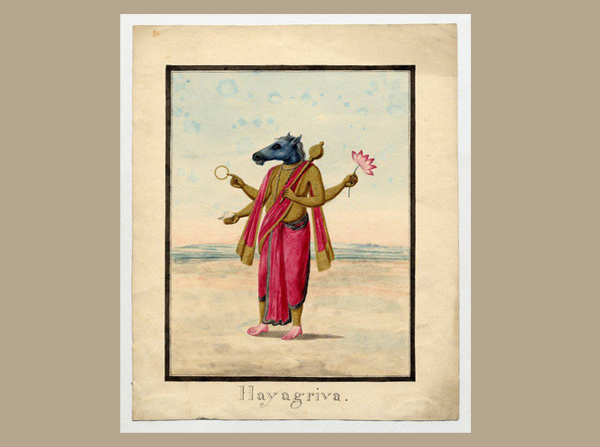
The horse-necked man


The myth of Hayagriva- man with a horse neck (griva), is mentioned in Maitreyi Samhita ( 4.9.1). It explains why Lord Vishnu’s head had to be substituted with a horse head.

In the Vedas, Vishnu is the god of sacrifices and is identified as ‘yajna’. Once  Agni, Indra, Vayu, and Yajna ( Vishnu) decided to perform a sacrifice. Gods decided that whoever receives a sacrificial gift first will divide it equally among the rest of them. Yajna (Vishnu) received the gift first. But he got greedy and refused to share it with others and ran away from the sacrificial grounds. The other gods immediately chased him. But Yajna who was quick-footed outran the gods and disappeared in the wilderness. After a while when he noticed that gods were nowhere in sight, Yajna was tired and decided to take a quick nap. But he did not want to take any chances as gods would catch him anytime, so he planted one end of his arched bow on the ground rested his head on the other end, in readiness to shoot an arrow,  and dozed off.

Meanwhile, the gods after searching high and low finally found Yajna ( Vishnu) fast asleep with his head rested on his bow. They decided to cut his head off. But who would do the task?  They commanded the ants in the wilderness to come together and gnaw at the bowstring of Yagna’s bow. But the ants refused to oblige and the Gods made a deal that ants would from then on get a part of sacrificial oblation in the form of clarified butter (ghee). Tempted by the offer ants agreed and quickly gnawed off the string. Released from the tension of the bowstring the arched bow snapped and flung the head of Yajna/ Vishnu high into the air decapitating him. The head rose into the sky and turned into a bright golden ball of fire and became the Sun. The Gods then replaced the head of Vishnu with a horse head, and thus Hayagriva was born.

Continue reading

June 27, 2019by admin
FacebookTwitterPinterestGoogle +Stumbleupon
Myth

Birth of Mandodari

Madhura was the most gorgeous looking among the celestial nymphs. All gods secretly desired her, but in her heart she was in love with Shiva. She did years of penance to please him but to no effect, as Shiva was lost in his meditation. Finally she set out to find him and reached Kailash. Lo! There he was seated in deep meditation. She quietly sat before Shiva with folded hands. After a while Shiva opened his eyes and saw the beautiful young woman seating before him. He instantly fell in love, and as the night progressed they couldn’t resist making love.

Continue reading

December 23, 2018by admin
FacebookTwitterPinterestGoogle +Stumbleupon
Myth

The Rainmaker

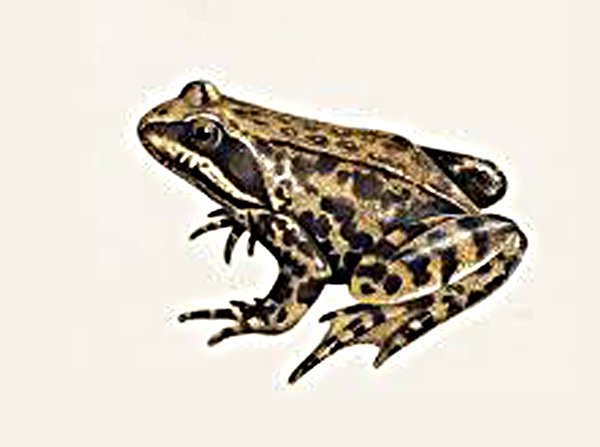
There once lived an old couple in the mountains. The old lady most of the time refused to cook for the old man, complaining her knees hurt and finding it hard to walk. One day the old man got really frustrated having to labour in the jungle as well work in the kitchen and in a fit of rage hit the old lady’s knees with a pestle. Plop! popped out a frog from the old lady’s knee. As the frog hopped around, he asked the old man to arrange a bride for him. With his wrinkled face and toothless mouth, old man looked carefully at the frog and said, “ I am too old and I can’t help you much in this matter. Why don’t you approach the chieftain of this hamlet. He has a beautiful daughter. Try your luck and see if he is willing to give his daughter to you in marriage”.

So went the frog hopping door to door asking for chieftain’s home. When he found the house he sat on the fence and with his hoarse voice croaked loudly, “Father -in- law, come out , please come out”. Chieftain came out but saw no one and went back inside. Again the frog croaked, “Father -in- law, Father-in -law, please come out.” chieftain would come out and and find no one . This went on for a while till chieftain found out it was a frog, sitting on the fence calling out to him. When chieftain asked him why he is calling him ‘father in law’, frog said, “Sir, I would like to marry your daughter”. Hearing this chieftain laughed out loudly and humiliated the frog for making such a ludicrous proposition. “Go away you stupid ugly frog, you are an insignificant creature. Don’t ever dream of having my daughter’s hand in marriage”.

Continue reading

December 4, 2018by admin
FacebookTwitterPinterestGoogle +Stumbleupon
Myth

Why Agni went into hiding?

There are many tales in the Vedas about Agni, the god who personifies the fire element. Here is an an intriguing tale from Adiparva (1.5-7), told by the bard Ugrashravas to Shaunak, who was performing a twelve year sattra. This tale is about why Agni went into hiding from the world and the other gods.

Puloma was married to sage Bhrigu. While she was pregnant with Bhrigu’s child, Bhrigu had to leave her alone at the hermitage and go away to attend a royal consecration. Meanwhile a Rakshas, by the name Puloman arrived at the hermitage. In the absence of her husband, Puloma as a duty bound wife received the Rakshas following the prescribed rites of hospitality. Having seen Puloma, the Rakshas was filled with passion and began to wonder whether Puloma was the same girl he had chosen as his wife, but instead was given to Bhrigu by her father. He wanted to clear his doubt before he made the next move. So when he saw fire (Agni) burning in the fire-pit (kunda), he commanded Agni to tell him the truth by revealing Puloma’s true identity. “If she is Bhrigu’s wife then I would carry her away, and if you tell me a lie then I would curse you”, he roared at Agni. Caught in the double bind, Agni chose to tell the truth and revealed that Puloma was indeed Bhrigu’s wife.

Instantly the Rakshas assumed the form of a wild boar and swooped down on the sage’s wife, swung her on to his back, and sped away. Unfortunately in the midst of this commotion the foetus she was carrying fell out of her womb. As it fell, it brightened the sky like a sun.  As soon as Rakshas Puloman turned around and looked at the baby he was burnt to ashes by the incandescent light that emanated from the foetus. The baby eventually came to be called Cyavana, meaning the ‘falling one’.

Puloma, scooped up her son Cyayana and fled weeping so much so that her tears combined became a river that followed her.  Meanwhile Bhrigu who was returning from his royal duty saw his wife and son distraught and in a state of panic and fear. He promptly questioned Puloma “Who revealed your identity to Rakshas?”  “He could not have found out who you are by himself,” ranted Bhrigu. Puloma told him it was Agni who was responsible for her plight.  In the heat of his anger Bhrigu cursed Agni ‘sarvabhaksho bhavishyasi”. From now on you will be omnivorous!

Hearing Bhrigu’s curse, Agni was incensed and rebuked Bhrigu, “How dare you curse me sage Bhrigu?  I was only doing the duty of a witness.  Don’t you know I am the ‘mouth’ that feeds the gods and ancestors, and it is through me they ‘eat’ the oblations they receive from the faithful? I am the carrier of sacrificial oblations to the gods and ancestors, and how could I be omnivorous?”  Saying this Agni disappeared from the world and went into hiding.

When Agni disappeared from the sacrificial grounds, gods and sages were in great distress. They approached Brahma and told their plight. Brahma summoned Agni and pacified him by praising him as the maker of the world. And said, “O Agni, you will not be omnivorous with all your body, but only with certain flames. Besides, whatever you burn or ‘eat’ will be automatically be purified, hence you should not hesitate to resume your sacrificial duties.” Agni was satisfied with Brahma’s words and returned.

Indologists concur that the meaning of myths connected to Agni have to be understood in relation to the ritual texts of Brahmans.

Story Collected by: Vidya Kamat

Text Source: The Sanskrit Epics Representation of Vedic Myths by Danielle Feller

Location: Pan India

Image: Wikipedia courtesy  http://collections.lacma.org/sites/default/files/remote_images/piction/ma-34377946-O3.jpg Gallery: http://collections.lacma.org/node/246951


August 11, 2018by admin
FacebookTwitterPinterestGoogle +Stumbleupon
Myth

Ruru and Pramadvara

Indian mythology is replete with stories where women undertake extraordinary and perilous journeys to save their beloved from all kinds of sticky situations, at times even bringing them back from the dead.  The stories of Satyavan-Savitri, Nala-Damayanti, Arjuna-Ulupi show women moved heaven and earth for the men they loved.

Not as common are stories of husbands or lovers going the extra mile for their love. In that sense, the story of Ruru and Pramadvara that finds mention in the Adi Parva (Pouloma sub-parvan) of the Mahabharata is unique.

Continue reading

May 1, 2018by admin
FacebookTwitterPinterestGoogle +Stumbleupon
Page 2 of 4«1234»

…Current Event…

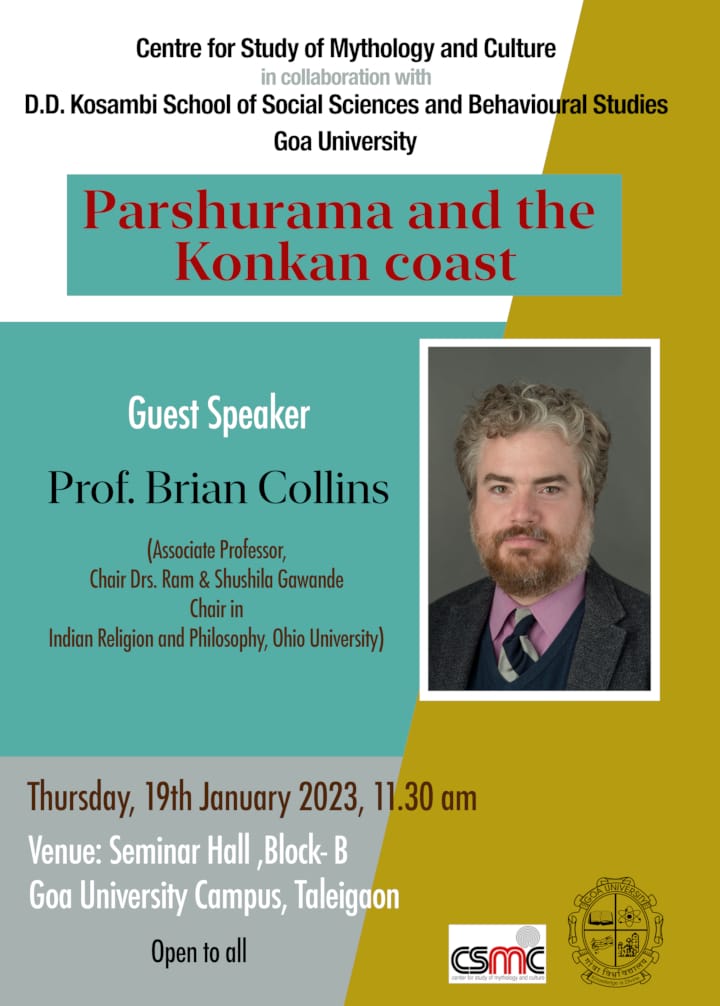
JANUARY 19, 2023

….Recent events….

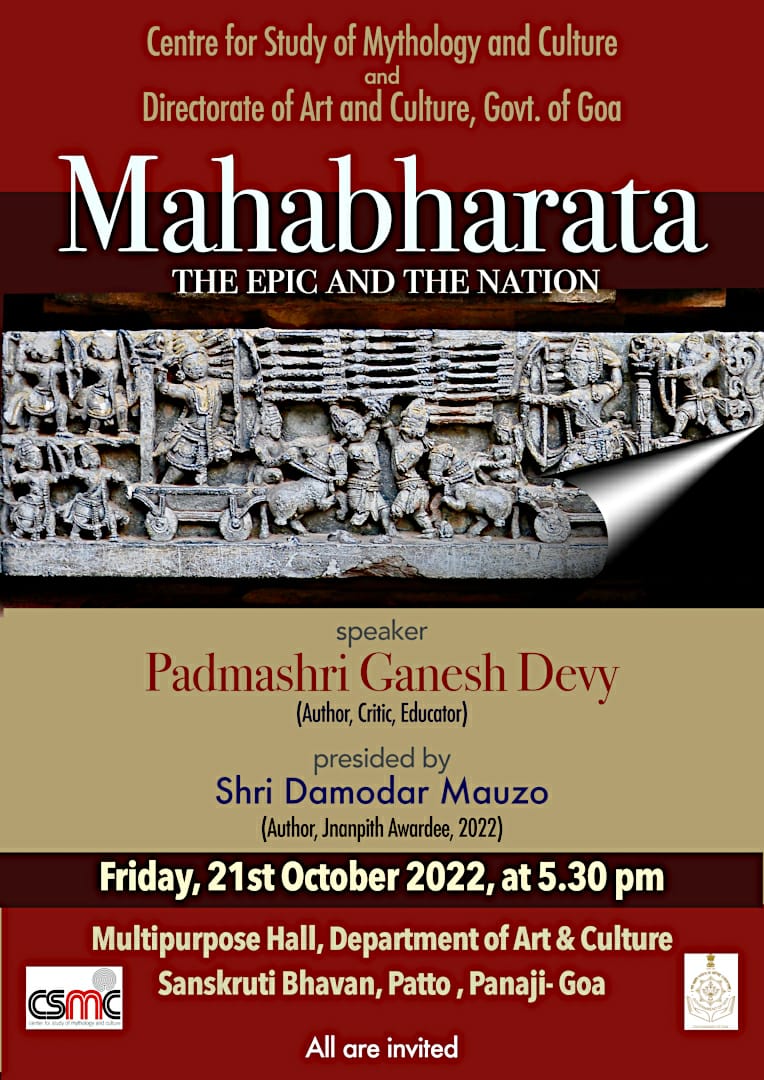
October-2022


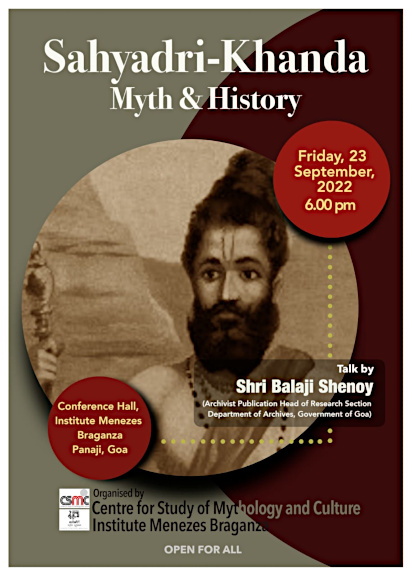
September-2022


October-2021


A CSMC Initiative

"To tell a story is to discover or reveal a secret"- A.K.Ramanujan

© 2015 copyright Talking Myths  All rights reserved
Website Developed by Raj Trivedi